

A Sanctuary of Sensory Delights
root & bloom
How to create a home garden that awakens the senses
words by mike corsie
photography by trent bell
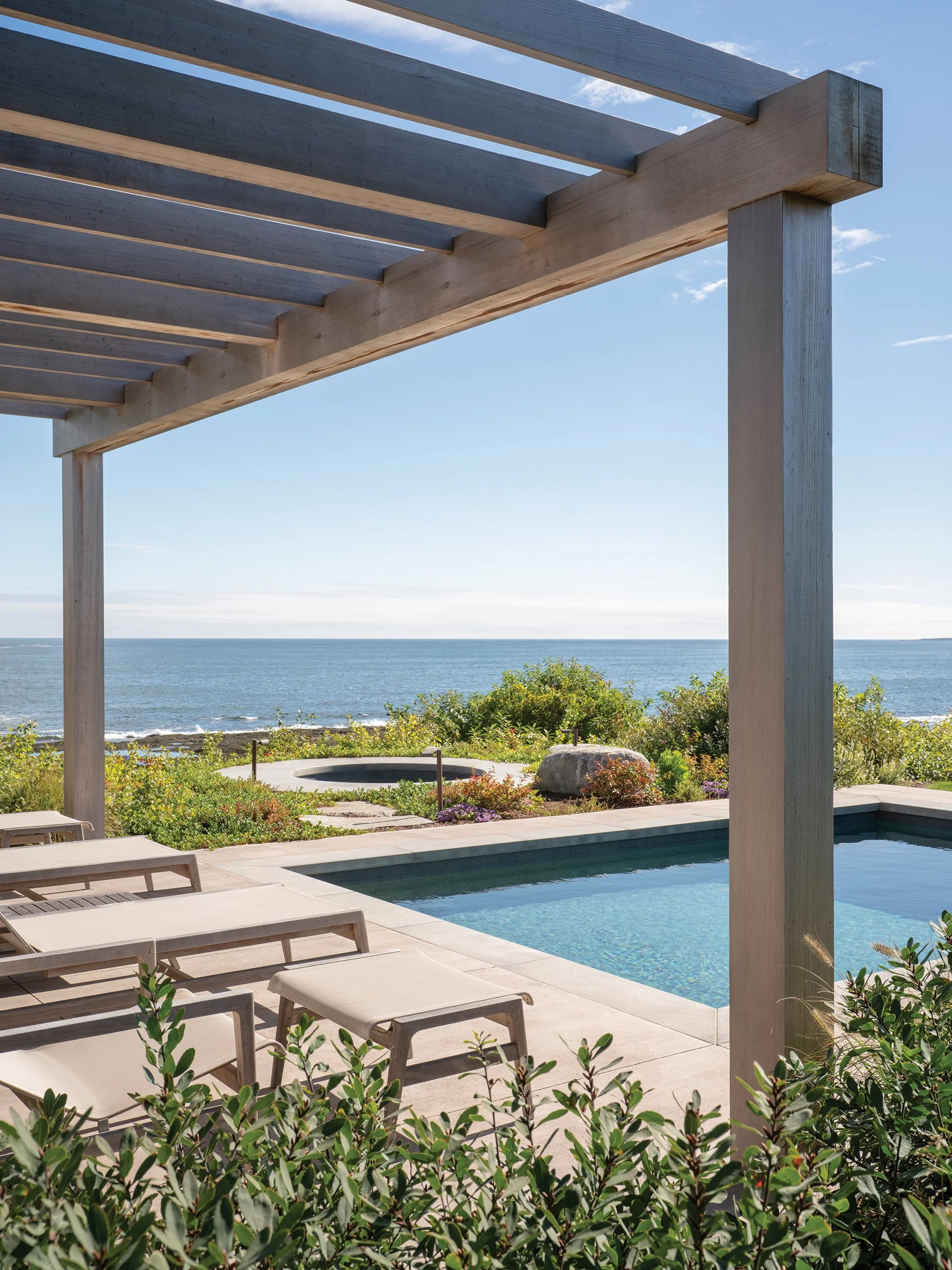
Water, native plants, and stone converge to create a refined outdoor retreat.
One of the most overlooked elements of garden design is the use of texture. We are all programmed to recognize color in the landscape, but once you start looking for texture, you can really appreciate it. In landscape design, texture refers to the overall presence of the plants and stone and how they combine to create a mood. Not only does texture play a major role in how a garden should be planned, but it also impacts the way in which the space is perceived as well.
Plant elements like foliage size, flower color, and bark and branch structure can be used to make a space feel larger, or more intimate through layering. Fine texture plants like ferns and grasses have small delicate foliage that sway in the breeze, giving movement to the garden. Fine texture contrasts beautifully with the grounding presence of coarse textured plants like the long scruffy needles of pine, or the dramatic blooms of hydrangeas. This contrast adds harmony to the space and ensures that the landscape is never flat or one-dimensional, but full of variety and rhythm that changes with the seasons.
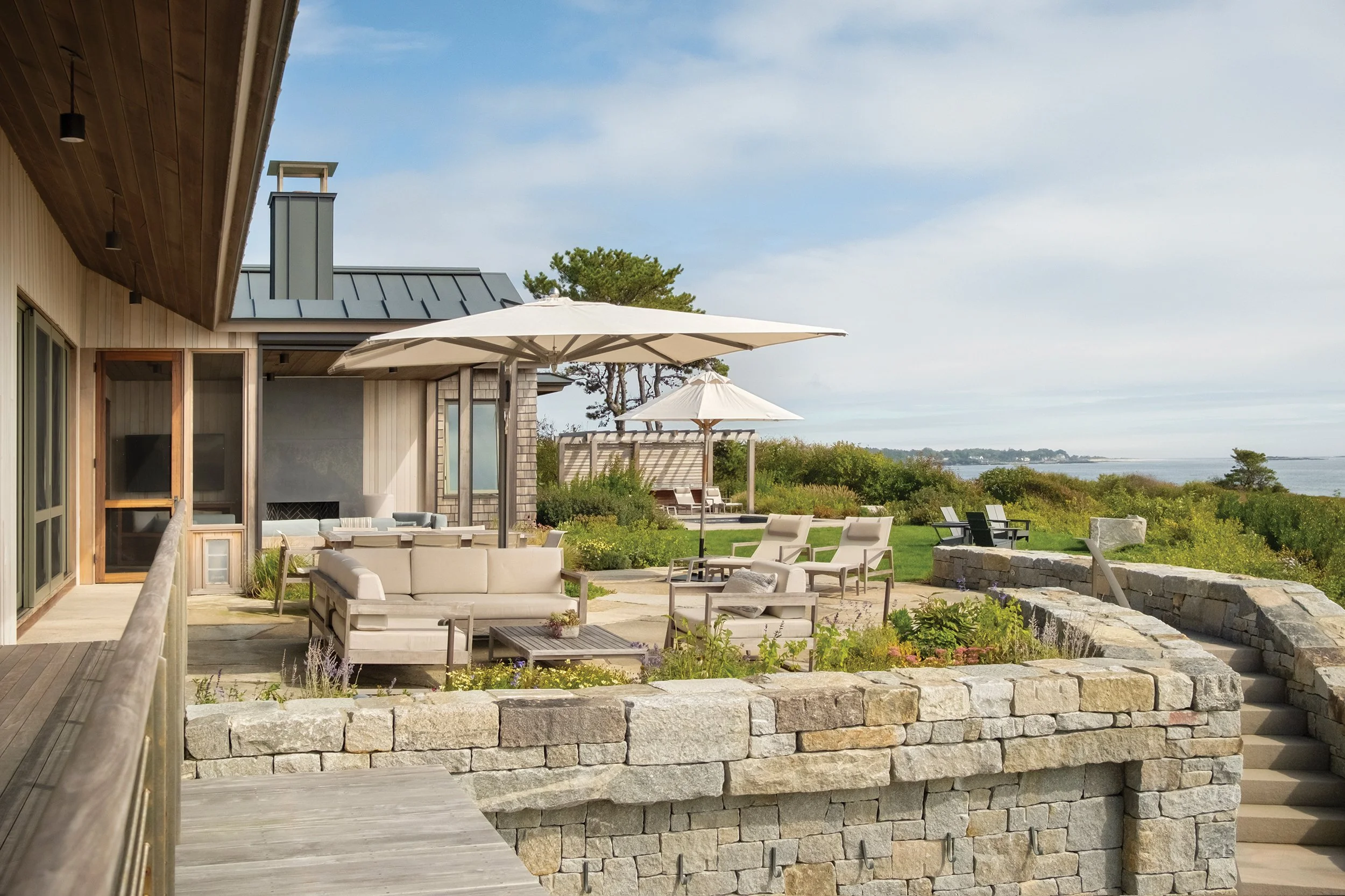
Hardscape textures add depth, character, and a functional element to the landscape. Hardscape refers to the non-living elements of landscape design, such as patios, pathways, retaining walls, and structures made from materials like stone, brick, concrete, and wood. Stone walls or unique boulders anchor a space and provide visual interest. The variation, character and bespoke feel of stonework adds rich texture, and timeless appeal that never goes out of style. Stonework texture also provides a rich sensory experience through touch (coolness and warmth, roughness and smoothness), sight (visual depth, veining, and patterns), and sound (the crunch of pea gravel under foot).
Wood structures like pergolas and trellises help define an outdoor living area and provide the feeling of being both indoors and outdoors. Pergolas can also create dynamic patterns of light and shadow that offer shade and visual interest when sunlight filters through. Wood offers a natural warmth and enhances the aesthetic of stone and plant material to complement architectural elements of a building.
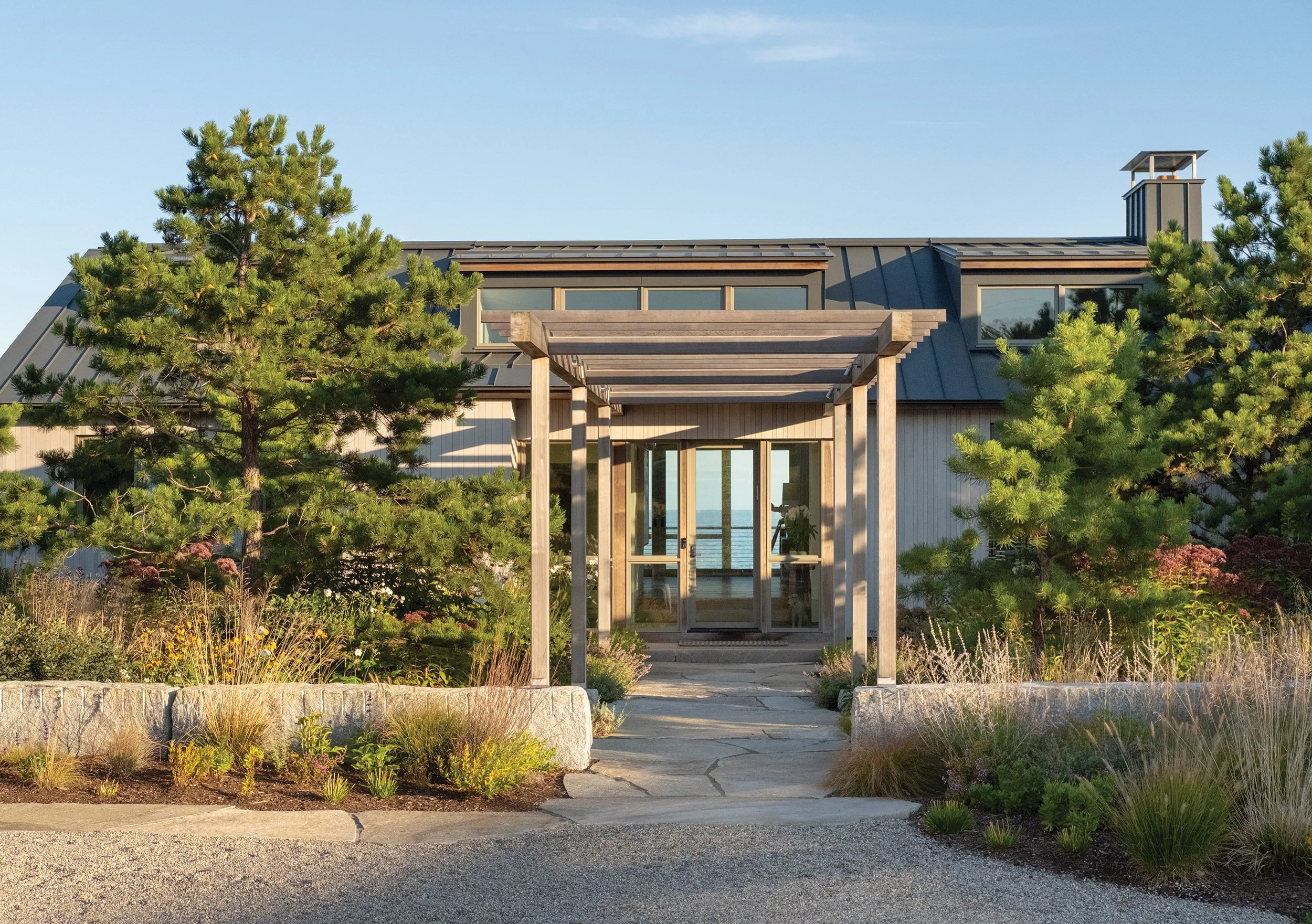
An elegant path sets the tone for a warm and stylish arrival.
Of all the elements that constitute landscape design, texture is the most often-unseen but ultimately becomes the key to creating a garden that captivates and evolves throughout the seasons.
A fundamental principle of Terrapin Landscape’s designs is to showcase the juxtaposition of rugged Maine granite with both coarse and fine textured native plants for a timeless and elegant garden that blends seamlessly into the Maine landscape.
Whether you’re aiming for a bold and dramatic display or a subtle, harmonious blend, texture is the key to transforming your outdoor space into a living work of art. By embracing the diversity of textures, you can create a garden that becomes a sanctuary of sensory delights.
Visit terrapinlandscapes.com to view their project photo gallery.
