

Foraging 201
Root & Bloom
Permission to go wild and get weird with what you eat
words by nina marie interlandi
The conversations in foraging circles are never-ending—and occasionally heated or confusing. How do you harvest “sustainably,” and what’s the “right” amount of any wild species to gather from any particular patch?
You might hear that picking all the mushrooms in one area kills their mycelial network, but you may also learn that the above-ground fruiting bodies are akin to apples on a tree, and harvesting any amount causes no harm to the underlying structure. You might hear that pulling up ramps by the roots is frowned upon, but you might also learn that “ramp shaming” is a bit overblown, as some are based on outdated research that may incorrectly over-estimate the time it takes for their regrowth.
Can thoughtful harvesting actually be beneficial by thinning out overcrowded clumps? What exactly defines an established crown of fiddleheads? Caring enough to initially educate yourself is—of course—a good thing. But let’s not allow that to paralyze us into spending more time behind a screen, swirling in fraught Reddit opinions. Let’s instead get out there and learn as we go.
The benefits to society and nature (if you insist on considering them distinct) are far greater if more of us are less afraid of wildness and blurring the lines between our lawn and our fridge. If you’re looking for these answers in the first place, willing to be wrong sometimes and adjust your behavior along the way, you’re doing it right.
Where it gets stickier is when some of the more commercialized or profit-driven foraging that supplies restaurants, for example, ignore standard etiquette. If a particular species in a single area has already been ravaged, even the most sustainably minded individuals can’t mount much of a defense. But sometimes, the best defense is to opt out of the situation altogether.
I might twist some knickers with this, but I actually find fiddleheads to be kind of … meh. I’m sure I’ve had wild ramps at a restaurant that wanted to claim foraged ingredients, but they left little impression. Perhaps the word “ubiquitous” is a tad strong. But well-known wild foods like those are, to me, right on the edge of feeling cultivated at this point. So, I ignore them.
I understand that the more traditionally foraged foods have a long history and nostalgic folks have every right to feel frustrated that their heritage is being ripped out. But profit and greed do have a way of forcing us to evolve. Maybe those over-harvested ramp spots can inspire us to shift our sights toward less obvious, more invasive, and—dare I say—more interesting quarries.
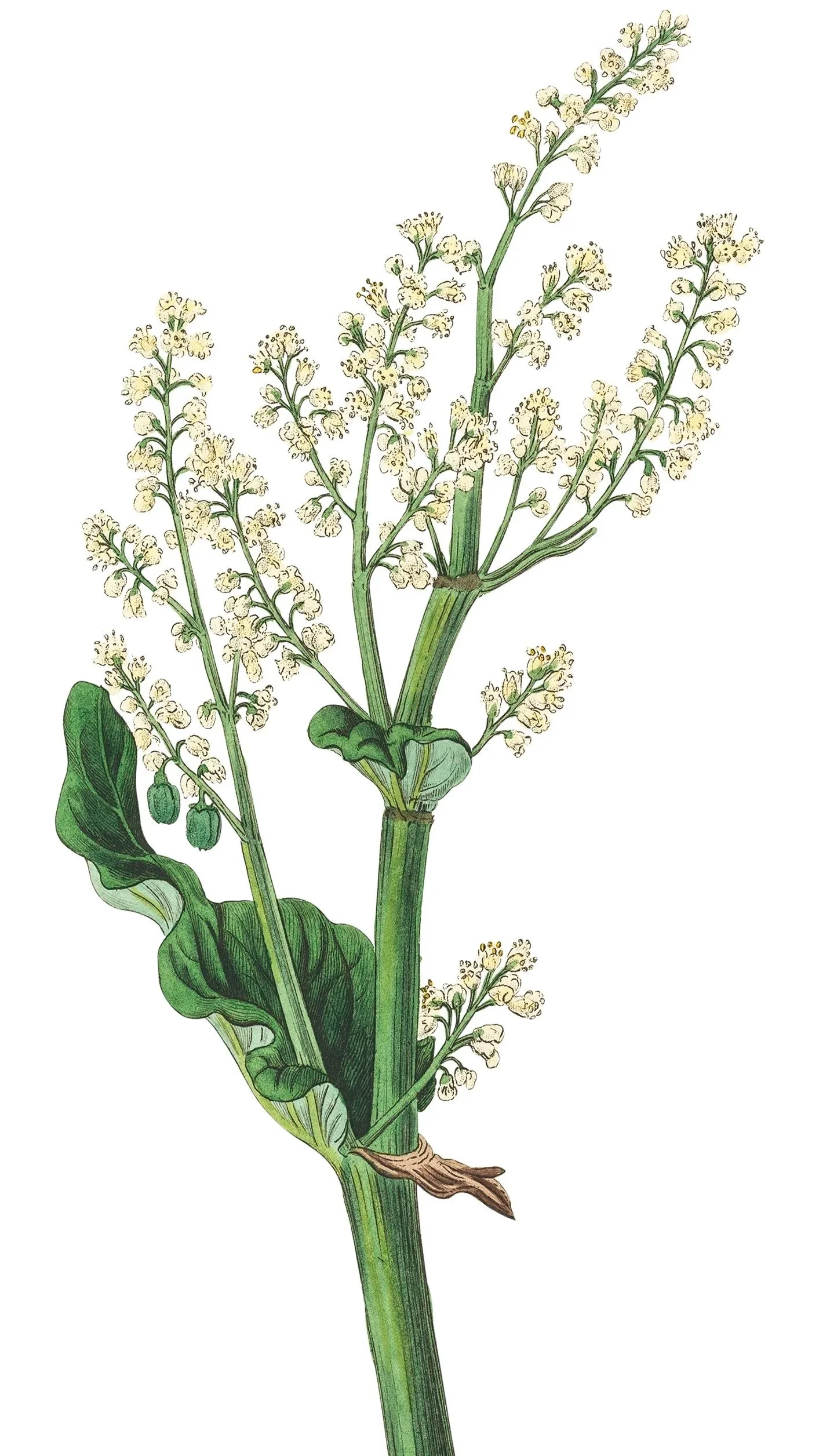
Some of my favorite wild foods started out as my enemies. It drives me crazy that Japanese knotweed seems to grow a foot an hour and steals sunlight from the lemon balm, rhubarb, lovage, and other intentional plants in the beds around my house. I firmly dislike the way the green-headed coneflower (sochan) plants crowd the view from my front porch swing with their rhizomatous creep, leggy stalks, and ill-proportioned flowers. In late spring, I would vacillate between rage-fueled delusions of being able to eradicate the knotweed and defeated paralysis of sitting on the porch swing, side-eyeing the sochan and muttering, “I hate those things.”
But a switch flipped for these enemies once I realized I could eat them. Neither of them are routinely showing up on restaurant menus, but I was less triggered the more I learned about their histories as food or medicinal sources. I go on one or two benders of hacking and dragging mountains of knotweed to the woods per season, but I’ve reframed it as physical therapy for my unrelated life rage. We have an understanding now.
I’m not saying we need to throw the towel in when it comes to continuing to educate, or fighting to sustain the wild species that hold the current spotlight. But sometimes, shifting the spotlight can be an effective additional strategy. Let’s get invasive. Let’s get weird.
Dried Queen Anne’s lace seeds are an excellent swap for cumin seed in curry or rice. Boiling down your own salt from seawater seems obvious, but is uncommon. I think making three jars of roasted shagbark hickory syrup is sexy. I’d wager at least half the “weeds” you’re pulling out of your garden beds make a pretty good quiche filling, and nobody’s going to yell at you for pulling those up by the roots.
Even weirder: Did you know that lactobacilli, the little buggers responsible for turning milk into yogurt, love to hang out in the soil just outside anthills? You don’t really need to express-order those frozen pellets to make your own yogurt—just a scoop of anthill soil (no ants included) in cheesecloth will do the trick just fine. I don’t think you’re going to get lost in a subreddit for that.
Let’s call this “Foraging 201.” It’s beyond dandelions (though they are still my favorite), but not quite boss-level wild-fermented vinegar. It requires a bit more dedication and knowledge (yes, you still have to research etiquette and proper identification), but it’s still accessible and fun. I’d love to help shift the spotlight a little and turn sochan into a rockstar. The day I see knotweed proudly described on a restaurant menu, we’ll all be better off.
In that vein, the recipe that follows is intended for one of those the-house-is-quiet, “I have time to fart around” mornings. Maybe you woke up to the sound of knotweed leaves rustling in the breeze and thought, “Today is the day I get right with you.” Maybe you’ve been watching a Jurassic-sized broadleaf dock plant mature at the corner of your barn and decided it needs a haircut. I haven’t provided many precise measurements for the 201 class, except where baking ratios could make a difference. Substitutions are encouraged. Go wild.
-
Makes one large (12” cast iron) or two small (mini cast iron)
INGREDIENTS
3 eggs
3/4 cup flour
1 teaspoon sea salt
2 tablespoons maple syrup
3/4 cup milk
METHOD
Preheat oven to 400°F
Combine eggs and flour (choose your ratio; I like half all-purpose and half curly dock seed flour) with sea salt, maple syrup, and milk of your choice in a blender for a minute or so until fluffy(ish). The batter will be thin.
In the cast iron pan, heat a few tablespoons of butter in the pan(s) in oven for 5 minutes. Keep an eye out so the butter doesn’t burn. Once melted, pour (or divide) the batter in the warmed pan(s) and bake for 10-15 minutes..
Turn down to 350°F, bake for another 10-15 minutes until the edges start to look browned. With the addition of the curly dock seed (or other wild, gluten-free) flour, the Dutch baby won’t puff up like you may be used to seeing—it ends up more like toothy brown bread. Cool for a few minutes in the pan before assembling the other layers of the stack. You can serve the whole contraption right from a mini cast iron skillet for extra charm.
ASSEMBLY:
Right in a mini cast iron or transferred to a plate, your crispy knotweed nest sits atop the Dutch baby. Following that, you’ll add a good heap of the yard chimichurri and finish with your fried egg. Finally, a pinch of sea salt, freshly-ground pepper, and chili crisp if you’d like.
Weedy Weekend Brunch Stack
I have an uncle who likes to make fun of “vertical food” as an entire category that’s too fussy, which it certainly can be. But I like this sort of assembly as it indicates you’re intended to take bites involving all the layers at once as opposed to maintaining divider-plate-esque silos. A forkful of hearty-sweet bread, salty-crunchy greens, tart-bitter salad, and savory-spicy protein will light up all your taste buds at once. Enjoy!
Still new to foraging? Work your way up to making this entire brunch; but feel free to start small with the Yard Chimichurri or even learning how to identify knotweed.
Yard Chimichurri
This condiment of sorts can accept all manner of additions depending on the time of year, but if you’ve got access to fresh rhubarb in the spring, I highly recommend the tart crunch it brings. For this version, I combined finely-diced rhubarb and red onion, minced garlic; and a chiffonade of dandelion leaf, curly dock, goosefoot, broadleaf dock, sochan, broadleaf plantain, and wood sorrel. Add a good olive oil, squeeze of lemon or lime, sea salt, freshly ground pepper, and a splash of either maple syrup or hot honey (I love the Bee Stinger from Barters Island Bees), stir to combine, and taste to adjust seasonings if needed. The greens will relax a bit as the chimichurri rests and you prepare the other items. It is a wonderful condiment to have on hand for meats, fish, veggies, and pasta.
Crispy Knotweed
Heat some fat in a small pan over medium heat, and toss in your rinsed knotweed shoots and leaves. They’ll cook fairly quickly, so be prepared to add a handful of crumbled feta after a few minutes (get a block of real sheep feta in brine instead of the pre-crumbled nonsense—it’s a whole different ball game). Once the knotweed leaves start to turn a bit translucent and crispy around the edges, add the feta for just a minute or two. It will melt quickly and you really just want to heat it up and create a bit of a nest among the knotweed. Finally, drizzle in a little hot honey about 30 seconds before removing from the heat—you want the honey to caramelize briefly but not so much that you end up with a burnt hockey puck that refuses to leave the pan. Lift the entire nest out of the pan with a wide spatula and don’t worry if it doesn’t all come out at once. Place on top of your Dutch baby and cover to keep slightly warm while you fry the egg.
Forage and follow along with Nina on instagram @ninamarieinterlandi