

Fresh Food Gardens
root & bloom
Drip irrigation changes everything.
words & photography by roberto rodriguez
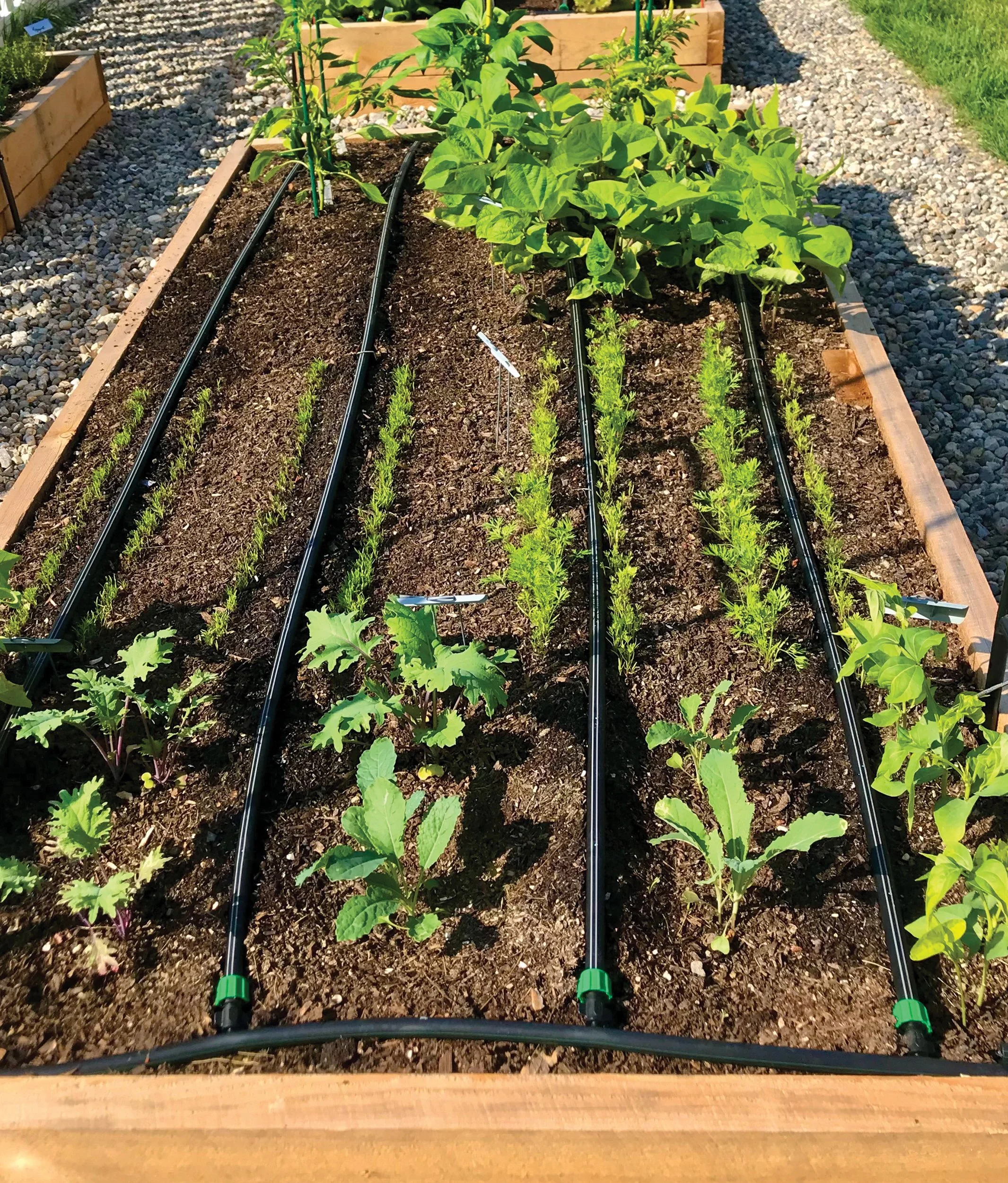
Planting along drip tape allows for efficient irrigation.
Water is one of the most important parts of a successful garden, but at the same time it’s often the one gardeners struggle with the most. Many home gardeners rely on hand watering or sprinklers, assuming irrigation systems are complicated, expensive, or better suited for large farms. In reality, drip irrigation is one of the simplest and most effective upgrades you can make to a home vegetable garden, especially when automated with a timer.
At Fresh Food Gardens, we use drip irrigation in almost every garden we build. It’s efficient, reliable and ensures plants get consistent moisture exactly where they need it.
Drip irrigation delivers water slowly and directly to the soil at the base of plants. Unlike sprinklers, it reduces evaporation, prevents leaf wetness that often contributes to disease, and minimizes wasted water.
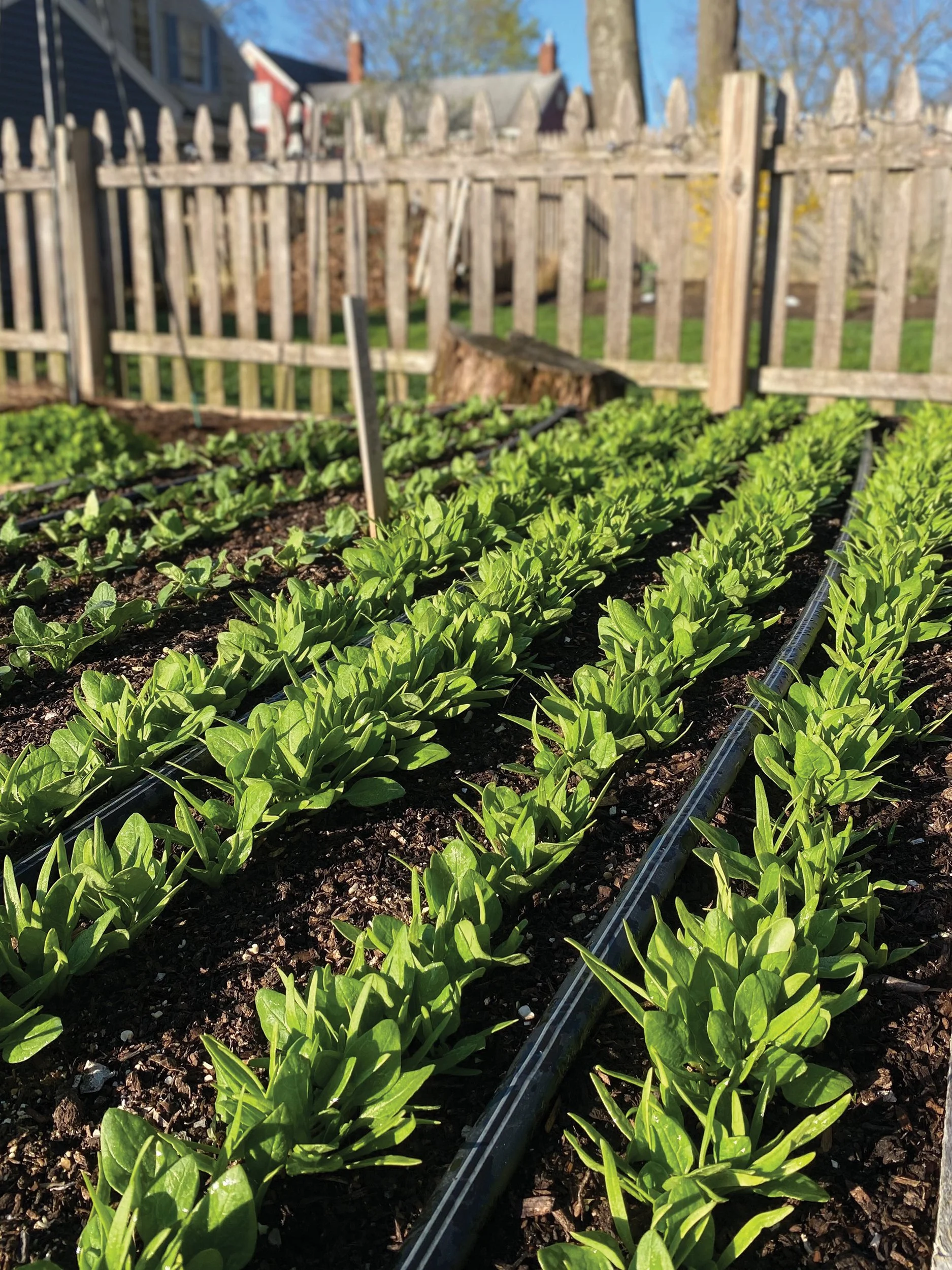
Watering early in the day gives vital moisture before the heat of the day can evaporate it.
When combined with a timer, drip irrigation becomes even more powerful. Instead of watering when you remember or when the weather feels hot, you’re watering on a consistent schedule worry free. That consistency supports healthier root systems and more resilient growth throughout the season.
A simple drip irrigation system for a home garden usually connects directly to a standard outdoor spigot. The core components include:
Timer: Automates watering so it happens consistently, even when you’re busy or away.
Pressure regulator: Reduces household water pressure to levels recommended by the drip line manufacturer.
Filter: Prevents sediment from clogging emitters and drip tape.
Polyethylene distribution line: Carries water from the spigot to the garden beds.
End-point delivery: Typically drip tape or individual drippers that release water slowly into the soil.
For most raised-bed gardens, these parts snap together easily and require minimal tools. Many gardeners are surprised by how straightforward installation actually is. In fact, one of the biggest misconceptions about irrigation is that it requires major planning or permanent plumbing. In reality, most systems we recommend for small home gardens connect to a spigot, run through the growing season, and only require disconnecting the timer during the winter months.
Drip systems can be installed at any point in the year, but it’s easiest to do when beds are empty. Installing before planting allows you to lay lines neatly without disturbing roots or compacting soil. That said, systems can absolutely be added mid-season with a little care.
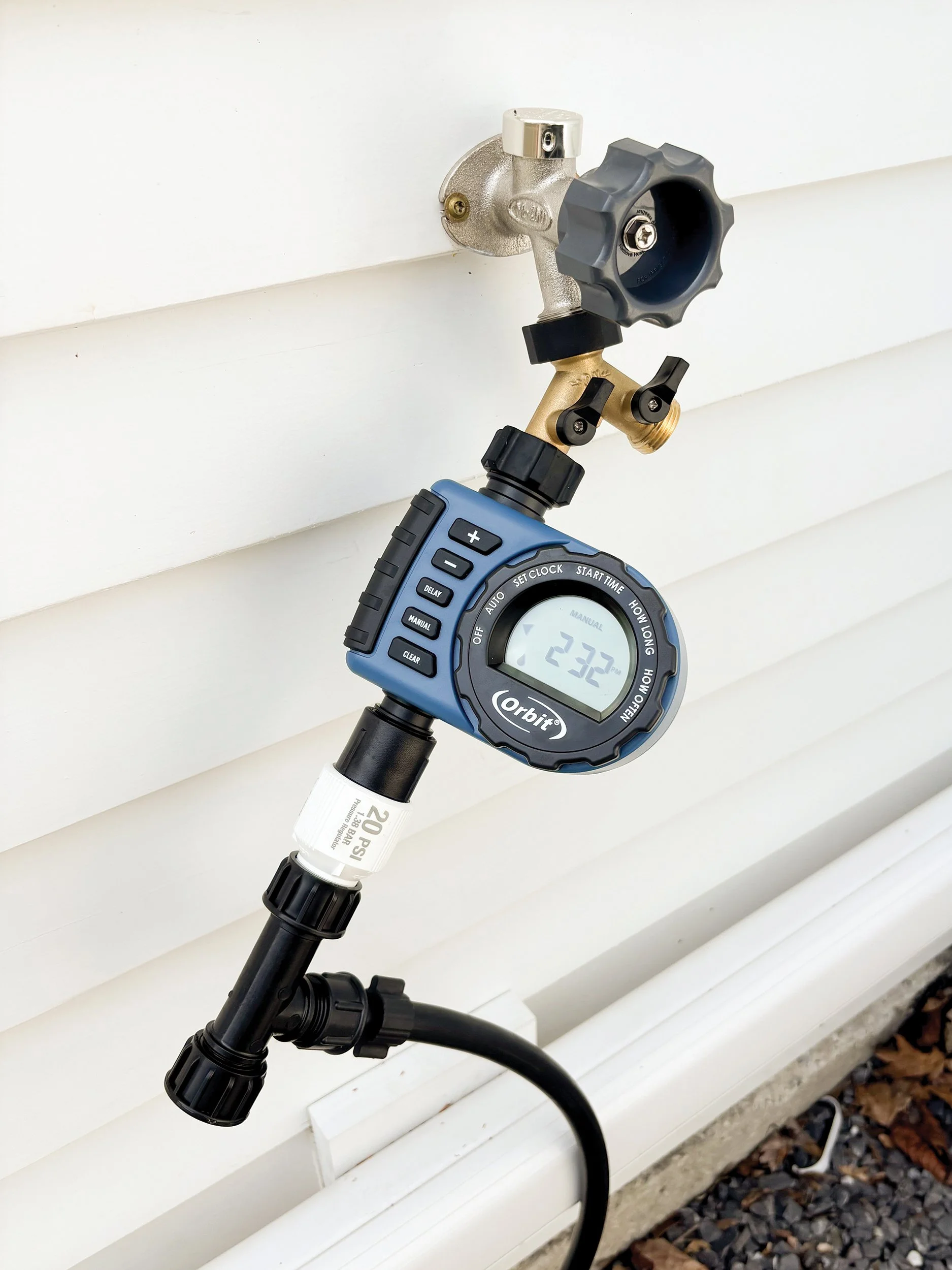
Timed irrigation sets your garden up for success--and let's you sleep in.
At FFG we use drip tape almost exclusively in our gardens, and we’ve built our planting and spacing system around it. Drip tape runs the full length of the bed, with emitters typically spaced six inches apart. Crops are planted in rows along those lines, making irrigation and layout work together instead of competing.
This approach allows for dense planting of greens and roots, efficient watering of larger crops, and predictable moisture delivery across the entire bed. Watering becomes part of the garden’s structure, not an afterthought.
For most annual vegetable gardens, we recommend starting with a simple baseline: once daily for about 25 minutes in the early morning. This timing reduces evaporation and gives plants access to moisture before the heat of the day.
From there, monitor soil moisture by checking a few inches below the surface, and pay attention to how plants respond. Adjustments should be gradual by adding five minutes at a time rather than making big changes. During periods of extreme heat or drought, an additional short watering in the afternoon can help prevent stress.
Soil composition plays a major role here. Sandy soils drain quickly and may require more frequent watering, while heavier soils hold moisture longer. Learning how water moves through your beds is part of the process, and each season adds valuable insight.
One of the strengths of drip irrigation is how easily it can be modified. Shutoff valves can be added to control individual beds or even single rows. Gardens can also be divided into zones, allowing different crops to receive different watering schedules based on their needs.
This flexibility makes drip irrigation suitable for everything from a single raised bed to a full backyard garden.
Like all good garden systems, irrigation improves over time. Each year you learn more about your soil, your crops, and your microclimate. With that knowledge, you can fine-tune schedules and layouts, making the garden more productive and enjoyable season after season.
For more information about Fresh Food Gardens, visit freshfoodgardens.com.
