

The World Woven into a Wedding
fashion statement
From Ghana to Maine, saying yes to the dress and everything else!
words by adele ngoy & ebenezer akakpo
photos by kim chapman photography & stephen davis phillips
interview by maggie knowles
From the day Coffee by Design opened in 1994, founder Mary Allen Lindemann (MAL) has focused on embracing and supporting the global community that is reflected both in coffee and in Portland. When it came to her November 2025, wedding to James Noel Hoban, she chose two designers whose story became a piece of her own.
“Adele and Ebenezer were my first and only choices to craft my dress and our rings for this special day. I know their work intimately. I admire not only the creativity and craftsmanship they bring, but also the spirit that is tangible in their work. They represent the high caliber of design present in Maine.”
They listened to what my marriage to James meant to me. They didn’t question what others did: Why marry at 65, would I wear white, why such a big celebration? They took my vision and far surpassed any dream I had of my wedding day, capturing who James and I are, making our wedding uniquely ours.
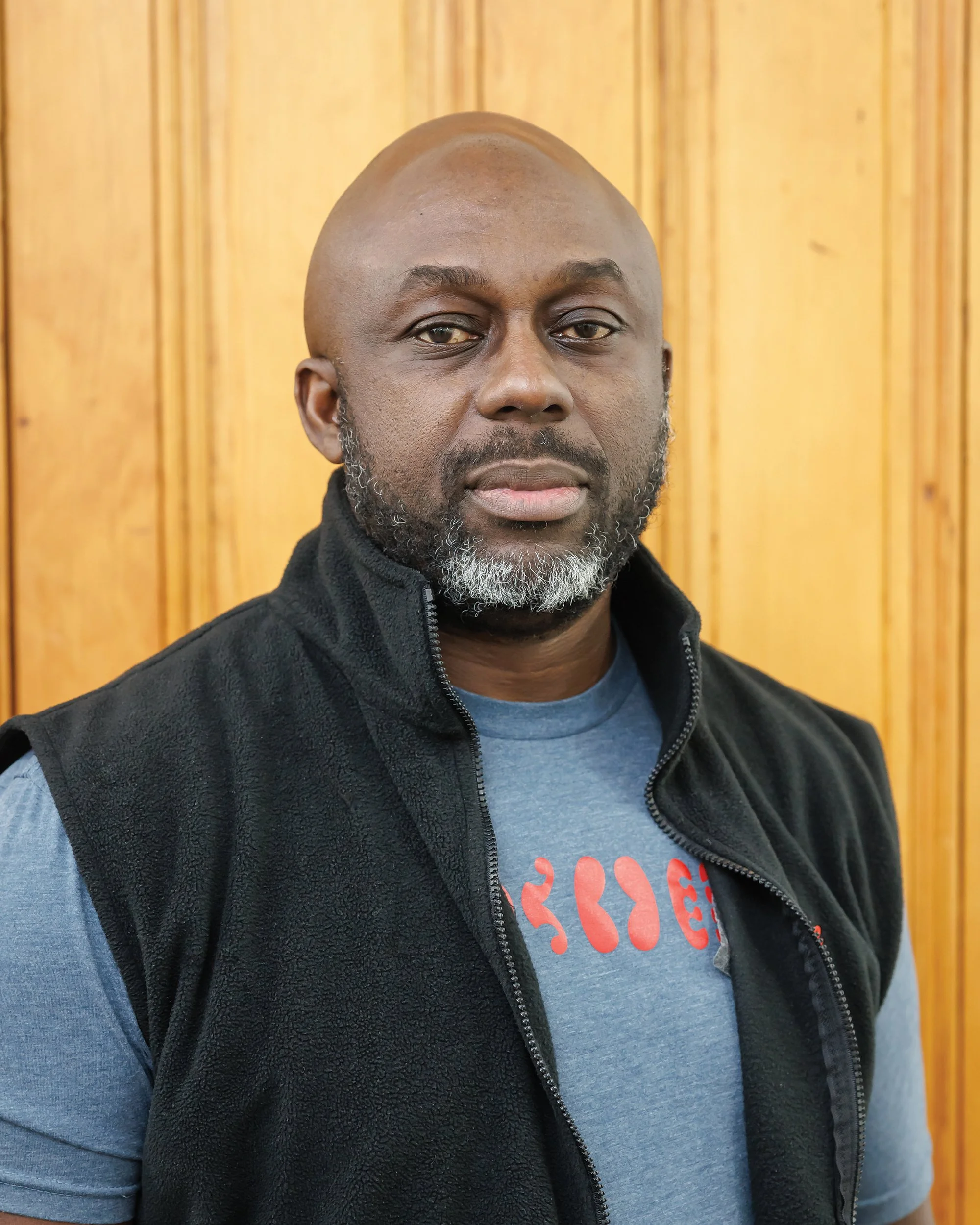
Ebenezer Akakpo
Ebenezer Akakpo is the founder and designer behind Akakpo and Co., a studio where cultural storytelling meets everyday design. Born and raised in Ghana and trained as a jeweler and industrial designer, Ebenezer works with Adinkra symbols, a visual language, to create jewelry, housewares, and apparel rooted in meaning and craftsmanship. His work honors heritage while shaping objects that feel personal, modern, and meant to be worn and lived with.
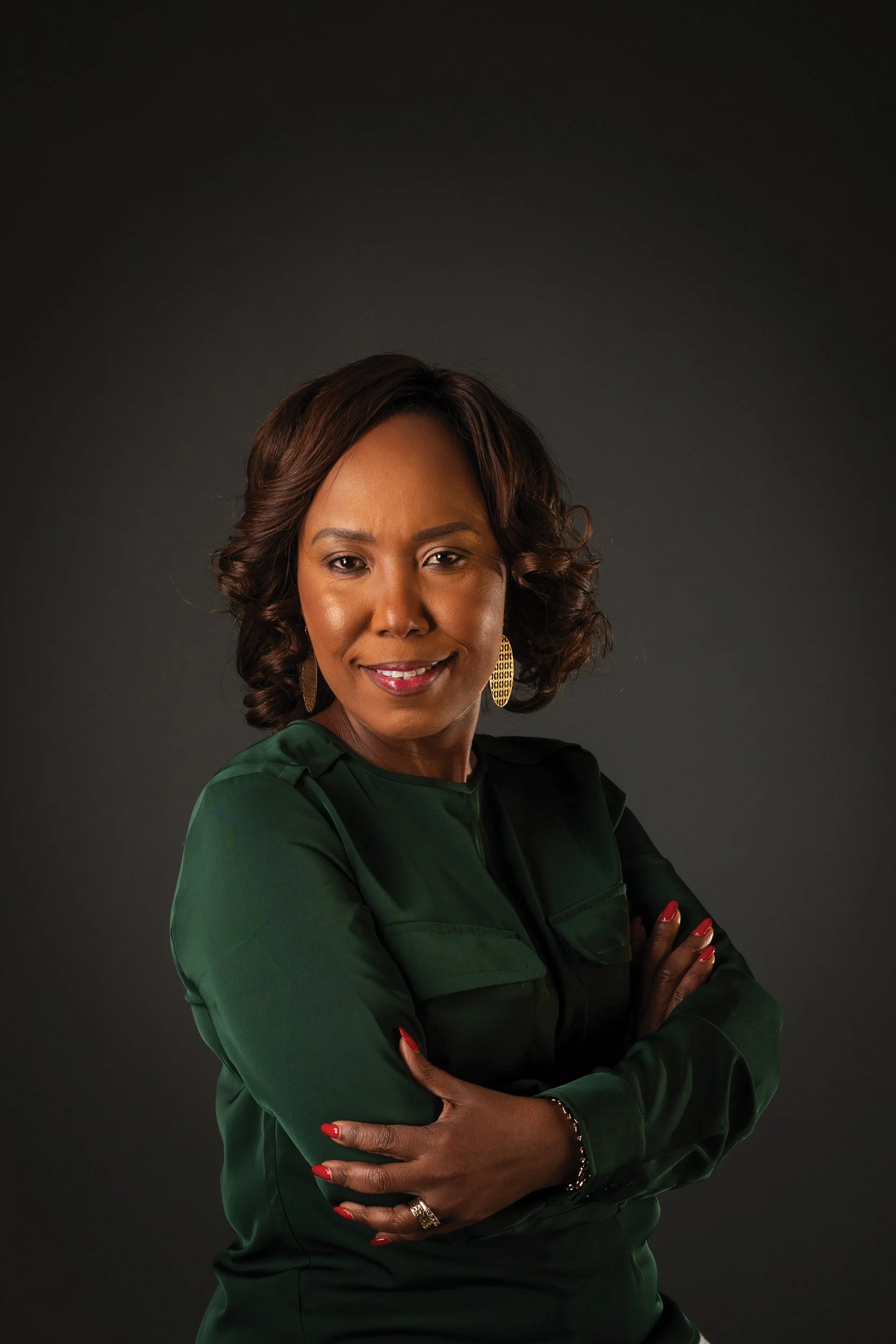
Adele Ngoy
Adele Ngoy is a designer who creates high-fashion garments from concept to finish, including design, pattern-making, sewing, and expert finishing. She is the owner of Antoine’s Tailor Shop and Formal Wear, and founder of Women United Around the World, a nonprofit supporting immigrant women. Originally from the Democratic Republic of the Congo, Adele ran a haute couture business and taught design. After fleeing civil war, she arrived in Portland 25 years ago, a single mother of three, with no English or resources. It has been a long and challenging journey, but Adele is proud to call Portland home.
1. Your work carries a strong sense of identity and storytelling. When you were designing these pieces for MAL, what personal or cultural stories came to mind in your creative process?
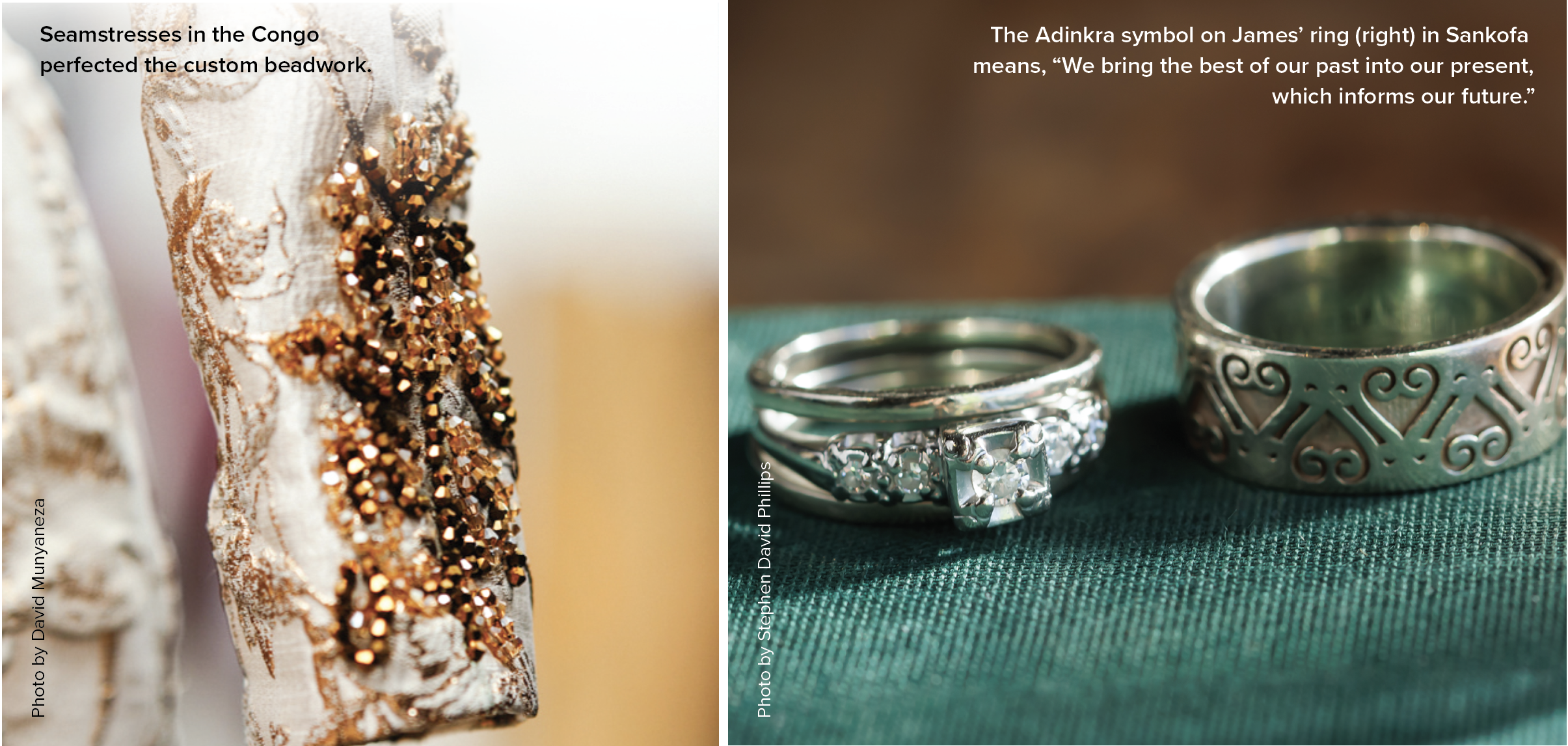
Ebenzer Akakpo: Storytelling is at the foundation of my work because objects gain meaning when they carry memory and intention. When designing for MAL, I thought about the items we keep for decades—not for material value, but for the stories attached to them, like an inherited book, bag, or piece of jewelry. Her connection to the Sankofa symbol, which speaks to returning to our roots and learning from the past, made it natural to weave that visual language into James’s wedding band to honor both personal and cultural legacy.
Adele Ngoy: This is an interesting question, because when I design a piece for a customer, my focus is on helping them tell their story. I offer guidance on fundamental design principles and the technical realities of building a complex wedding dress, but when I’m working with a client who knows what she likes, I try not to impose my own personal story or cultural history.
2. How do traditions, materials, or aesthetics from where you come from influence your designs today?
EA: Traditions from where I come from guide both my material choices and my design mindset. Ghana was once known as the Gold Coast, and gold has long been worn on important milestones like marriage, making it a natural material for wedding pieces meant to last a lifetime. When paired with cultural symbolism and thoughtful design, those traditions help transform jewelry into something deeply personal rather than purely decorative.
AN: I trained in Kinshasa with both European and African professors and developed a strong foundation in European haute couture, while my early clients blended African and European aesthetics in sophisticated ways. As a result, I don’t approach design from a strictly African or Western perspective, but from a broad palette shaped by both traditions.
3. These designs were created for someone deeply rooted in community and connection. How did MAL’s story, values, and work with immigrant communities shape your approach to this collaboration?
EA: MAL’s story and values are rooted in care, community, and connection, and that shaped how I approached every part of this collaboration. My role was to honor the deep meaning already present in the engagement ring while thoughtfully weaving in the story MAL wanted to carry forward into their marriage. The final design became a quiet expression of belonging, love, and continuity, created to feel personal, intentional, and timeless.
AN: I love working with clients who have a strong sense of fashion and are willing to be bold, and MAL is one of my favorites—she’s beautiful, knows what she likes, and wears clothes with confidence. Her work with immigrant communities also resonates with me, because I understand what it means to start over and to help others feel seen. Some of my most cherished projects come from helping women feel beautiful in ways they hadn’t before, and that same spirit of empowerment was at the heart of my collaboration with MAL.
4. Many of your designs balance heritage with modern elegance. How do you honor where you come from while designing for contemporary wearers and global audiences?
EA: I honor where I come from by using visual language symbols from Ghana as the foundation of every design. These symbols carry meaning and history, and I reinterpret them in modern forms, clean lines, and wearable pieces so they feel natural to people today. By grounding the work in shared human values such as memory, connection, and continuity, the designs remain rooted in heritage while speaking to a global audience.
AN: I’m always collecting ideas—from museums, fashion shows, and other designers—which keeps my work connected to both heritage and the present. But the most satisfying part is melding the client’s tastes with my own sense of what’s possible to create something uniquely suited to her. In that way, I honor where I come from—a sophisticated culture of fashion—while designing beautiful pieces for contemporary women from many backgrounds.
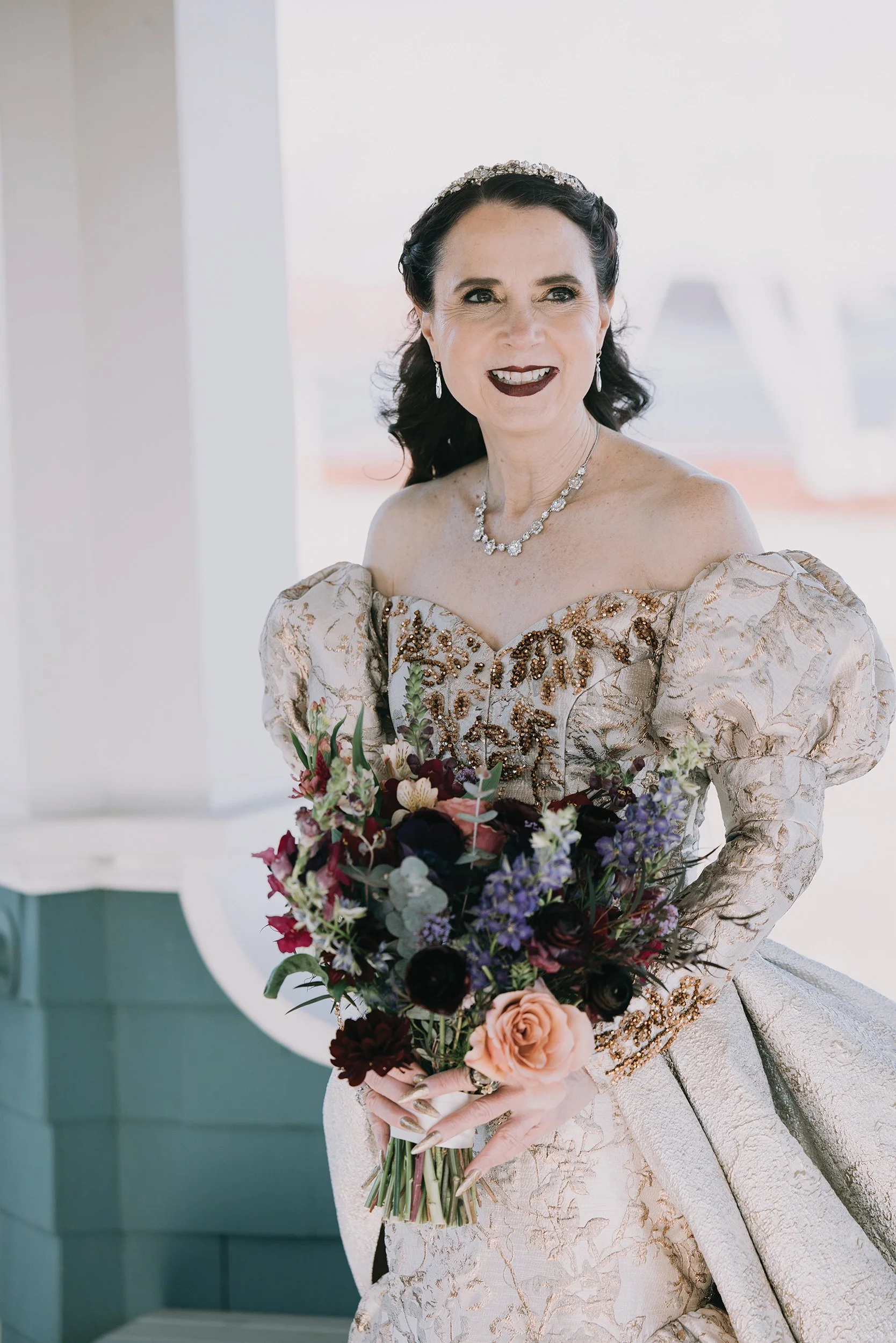
Photo by Kim Chapman Photography
5. Can you walk us through a specific detail in your design that holds special meaning for you?
EA: The engagement ring James chose for MAL is an antique with a story of its own, so my role was to honor that history while thoughtfully adding a new layer. I designed an exoskeleton, a clamp-style structure that protects the ring’s fragility and supports it visually, allowing the new work to integrate seamlessly without overpowering what already existed. White gold was chosen as a material match to the engagement ring, helping the final piece feel unified, intentional, and timeless.
AN: I still have strong connections to designers and seamstresses in Congo, and we were able to do some custom bead-work on MAL's dress that couldn't have been done cost-effectively in the U.S. It is beautiful. I loved that!
Visit akakpo.com to view Ebenezer's beautiful work.
