

A Revolutionary Road Trip
Arts & Culture
Maine Historical Society takes a founding document throughout Maine
words by Tiffany link
photos courtesy of the maine historical society
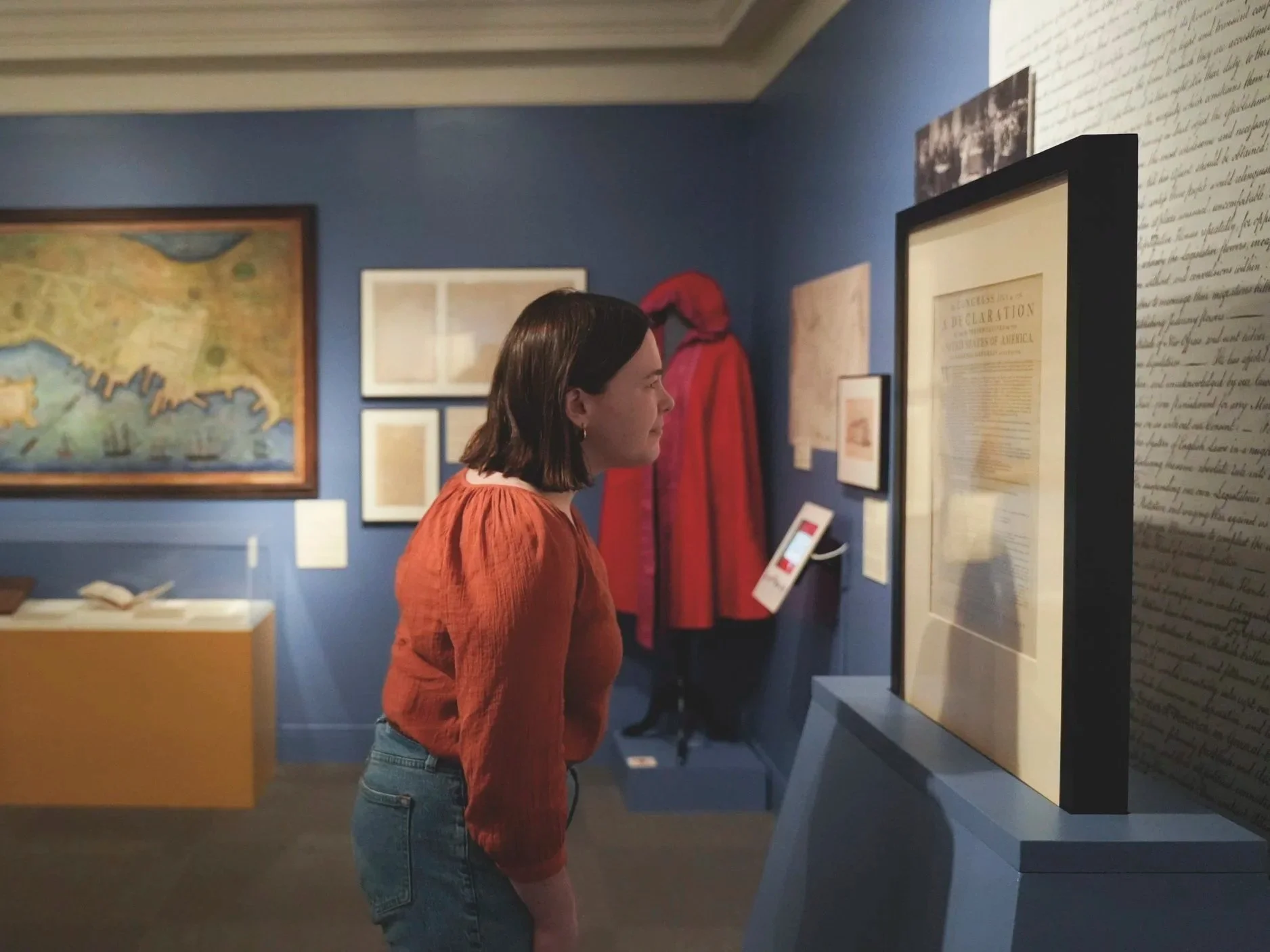
This summer and fall, one of the rarest documents in American history is traveling to communities in all 16 Maine counties, courtesy of the Maine Historical Society (MHS).
The society’s original Dunlap Broadside of the Declaration of Independence, one of only 26 known to survive, is traveling statewide as part of Revolutionary Maine: America at 250, MHS’s commemoration of the 250th anniversary of the nation’s founding.
Rare artifacts like this typically remain in one place, accessible only to those who can visit in person. The Dunlap Broadside Tour flips that model. Rather than asking Mainers to come to Portland, MHS is bringing history to Mainers, in their own communities.
After years of protests, petitions, and failed negotiations with Great Britain, the Continental Congress voted for independence on July 2, 1776. Two days later, delegates approved the final text of the Declaration. Then came the challenge: spreading the news.
That task fell to Philadelphia printer John Dunlap. Working through the night of July 4th, Dunlap and his apprentices set the type by hand and printed roughly 200 broadsides, each sheet an act of open rebellion against the Crown. Speed mattered. Congress understood that public support for independence depended on spreading the news quickly. John Hancock, president of Congress, directed copies to trusted officials for public readings, posting, and local reproduction—transforming a congressional decision into a shared public moment.
MHS’s copy entered the collection in 1905 through the bequest of Dr. John S. H. Fogg. A native of Eliot, Maine, Fogg was a dedicated collector of historic autographs and documents with a particular interest in the Revolution. He believed his collection would connect his home state to the nation’s founding story. More than 130 years later, MHS is doing just that.
The year before, in 1775, British forces destroyed Falmouth (now Portland), an event that inspired the Declaration’s accusation that King George III had “burned our towns,” one of 27 grievances Congress listed against the King. That line wasn’t an exaggeration and made the case for independence personal and urgent.
For Wabanaki communities, the Declaration raised concerns that American independence would bring additional threats to their homelands. Still, some cautiously hoped long-standing ties with local colonists might bring greater stability than British rule. Black Americans heard the language of liberty, but the promise of equality failed to materialize. Some enslaved men gained freedom through military service, but slavery remained entrenched after independence. Women managed households, farms, and businesses and produced essential goods that sustained the war effort, with no expansion of their political rights. Many patriot soldiers endured brutal shortages, and dangerous service, and impoverished conditions after the war. Loyalists faced suspicion, confiscation of property, and, for many, flight to British-held Nova Scotia or England.
MHS’s companion exhibition, Pathways to Freedom: Maine Stories of the American Revolution, engages this complexity directly, telling the Revolution not as a single triumphant story but as many stories, often in tension with one another.
The Declaration’s preamble offers daring ideas of equality and liberty. It boldly suggests that governments are answerable to the people, who are in turn responsible for preserving governments that protect “Life, Liberty, and the Pursuit of Happiness.” Every generation since 1776 has had to decide what those words actually require of them. Ours is no different.
By bringing one of America’s founding documents directly to Mainers, the Maine Historical Society hopes to spark conversations and invite reflection on where we have been and where we are headed as a state and as a nation and invites you to join.
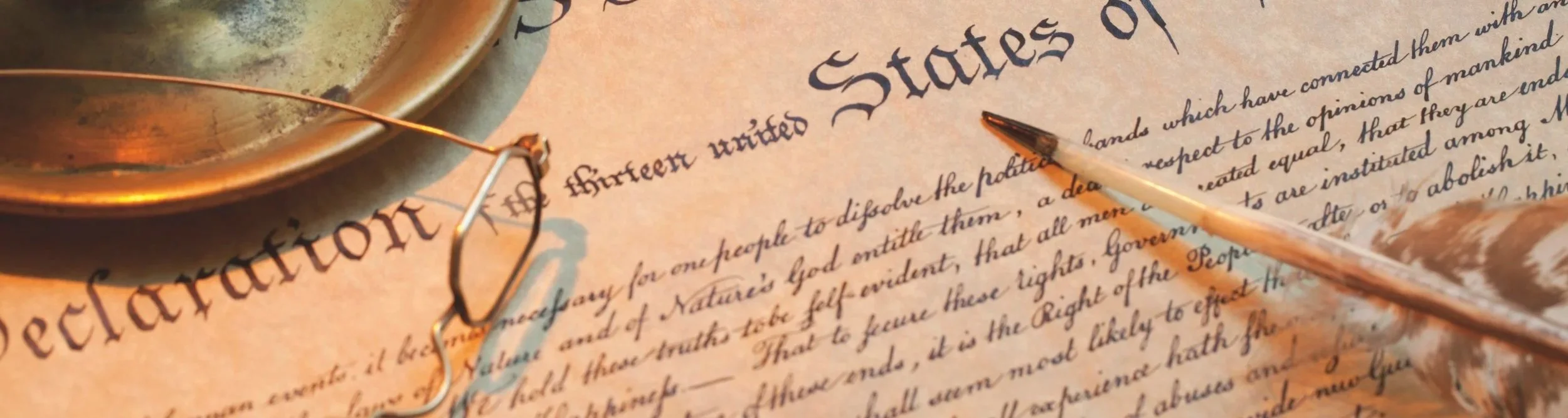
Visit mainehistory.org to make a reservation to see the Dunlap Broadside and visit Pathways to Freedom: Maine Stories of the American Revolution at Maine Historical Society.