

The Gulf Before
Features
Cashes Ledge offers a rare glimpse of what
the Gulf of Maine looked like 400 years ago
Words & Photos by Jennifer Alder
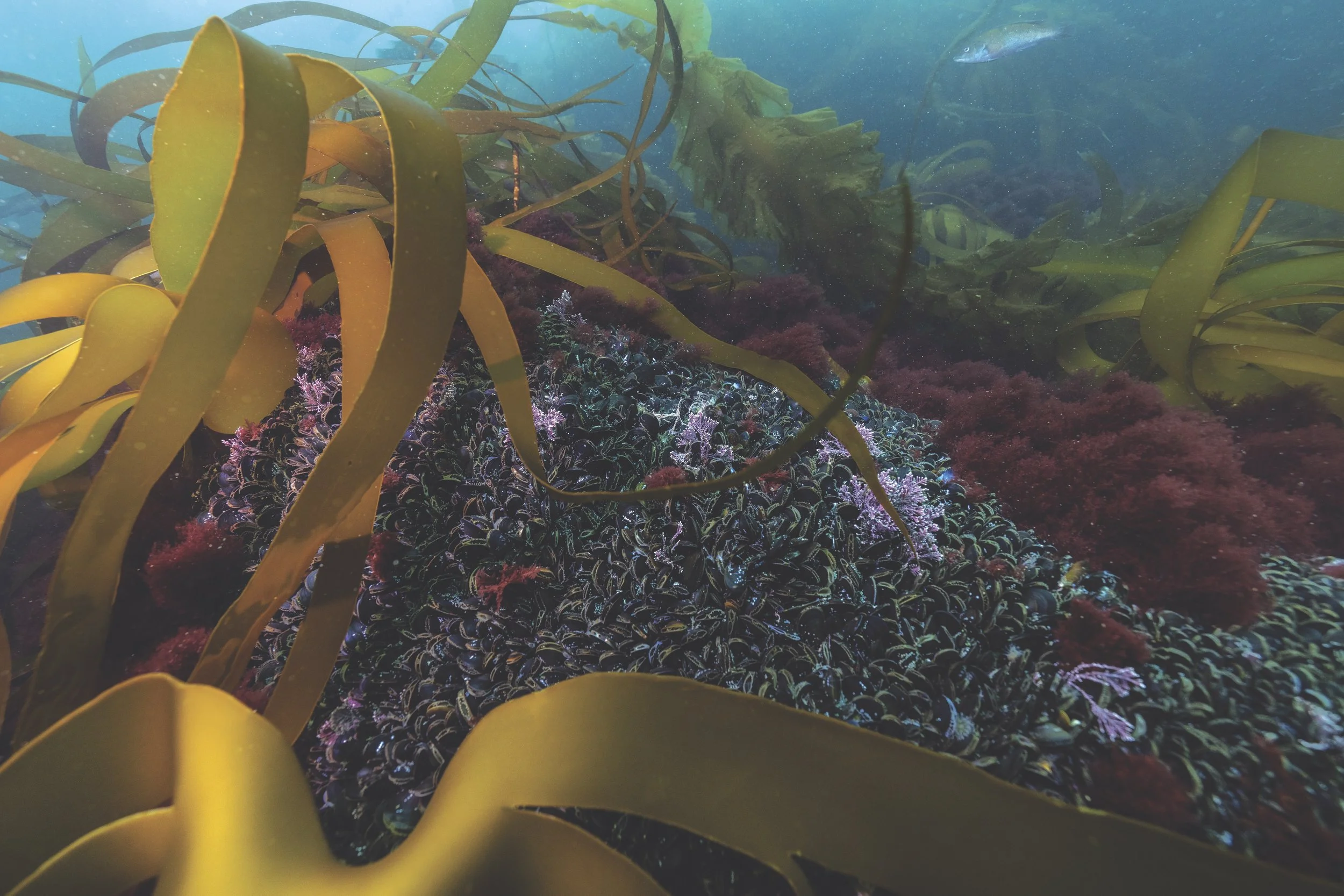
Kelp (Laminaria digitata) surrounds a bed of mussels.
At 5:02 a.m., we pass the Isle of Shoals—it’s the last land we’ll see until sunset. We motor east for about 100 miles on the Gulf Challenger, the University of New Hampshire’s research vessel, to Cashes Ledge deep in the Gulf of Maine. We are going to dive to the top of an underwater mountain that rises 40 feet beneath the surface. Often called the Yellowstone of the North Atlantic, this submerged mountaintop rests 90 miles offshore and is home to the most significant kelp forest on the Eastern Seaboard.
Kelp forests thrive in cold, nutrient-rich waters, lining about one-third of coastlines worldwide. Kelp are a subset of brown algae–you’ve probably seen them washed up on the beach or floating in the ocean after a storm. Most kelp forests along Maine’s coast have disappeared or degraded, but Cashes Ledge offers a time capsule into what the Gulf of Maine’s kelp forests used to look like 400 years ago, before warming waters, overfishing, and an invasive red algae took over.
Jon Witman, emeritus professor of ecology at Brown University, has studied and documented Cashes Ledge for almost 50 years and says, “It’s like a museum in the Gulf.”
Diving into Another World
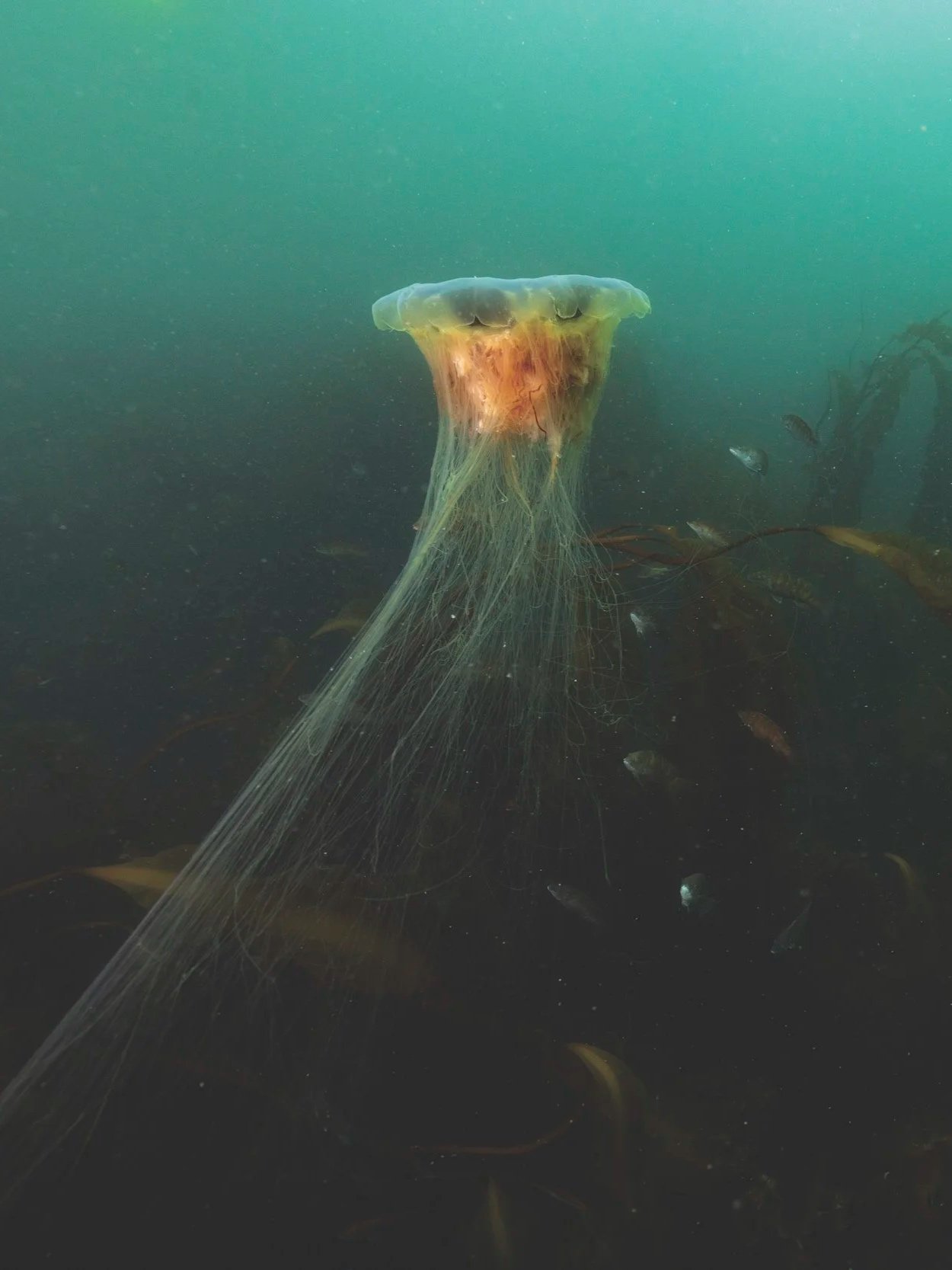
A Lion’s Mane (Cyanea capillata) jellyfish dances above the sugar kelp.
Suiting up in a drysuit in July is like putting on a snowsuit in the beach parking lot in the summer. Sweat drips through my mask and into my mouth. I wonder if Witman’s kelp forest in the middle of the ocean is worth the 3:15 a.m. wake-up call and the 100 pounds of dive gear on my back.
The crew drops an orange buoy with an anchor into the water. We jump off the swim platform and head straight for the buoy before we get swept away by the current. We pull down the descent line into the hazy green water—it’s 48°F and I’m grateful for the drysuit. I see University of Florida marine ecologist Robbie Lamb’s neon yellow fins kicking down in front of me. As I acclimate to the cold and my breath steadies, a gorgeous kelp forest appears.
The sugar kelp (Saccharina latissima) looks like long lasagna noodles swaying on the bottom. The other main kelp species, Laminaria digitata, has “digits” like a hand, waving golden and graceful in the surge. Curious cunner—orange fish that buzz like bees in a garden—greet us as we enter their watery realm. The bigger Atlantic pollack swirl in a tornado, blocking out the sky like fast-moving storm clouds. Historically, there would have been more cod than pollock, but now you can count the cod on one hand—most of them have been fished out.
I stick to Lamb like glue so I don’t lose him in the murky water. He notes down the number, size, and species of each fish as he swims. At the end of the dive, we find Witman and his dive buddy, Elizabeth Kintzing, University of New Hampshire dive safety officer, collecting kelp in mesh bags. They toss a bright yellow square of PVC (a “quadrat”) into the forest, and it disappears into the thick kelp. Armed with putty knives, they also disappear into the forest to scrape the kelp off the bottom and collect it without dropping it or letting it drift away. It’s an exercise in patience with the swell and current. Back on the boat, they will measure and weigh it to estimate how much kelp is on the mountaintop.
During our last transect, my fingers are starting to lose function from the cold, but I quickly forget all about freezing when a fish that looks like it emerged from the Twilight Zone swims by. Turns out it’s a monkfish, and it is, in fact, related to an angler fish—it looks like a tasseled wobbegong but a bit less tassel-y. It’s flat, about four feet long, with large, widely set, twinkling green-blue eyes.
Protecting the Kelp Forest
I grew up along the shores of the Gulf of Maine but had no idea this marine museum existed. I spent the past six years documenting kelp forests on every continent and absolutely couldn’t believe that there was one this spectacular practically in my own backyard.
Witman is working with the Conservation Law Foundation to make sure it’s protected. In January 2025, they got Cashes Ledge onto the inventory of successful nominations for National Marine Sanctuaries. Kelp forests provide important nursery habitat for fish, like cod. A 2023 paper published in Nature, found that the kelp forests in the northwest Atlantic had the highest economic value in the world for fisheries. Like terrestrial forests, they serve as a crucial habitat and 3-D structure that provides refuge for fish, invertebrates, and larger marine mammals. Kelp also uptakes carbon and releases oxygen through photosynthesis.
“As a scientist, I want to have impact, and this is one way that I can use the information I’ve gathered to advocate for the protection of an absolutely exceptional marine ecosystem,” says Witman. “It has no parallels in the North Atlantic.”
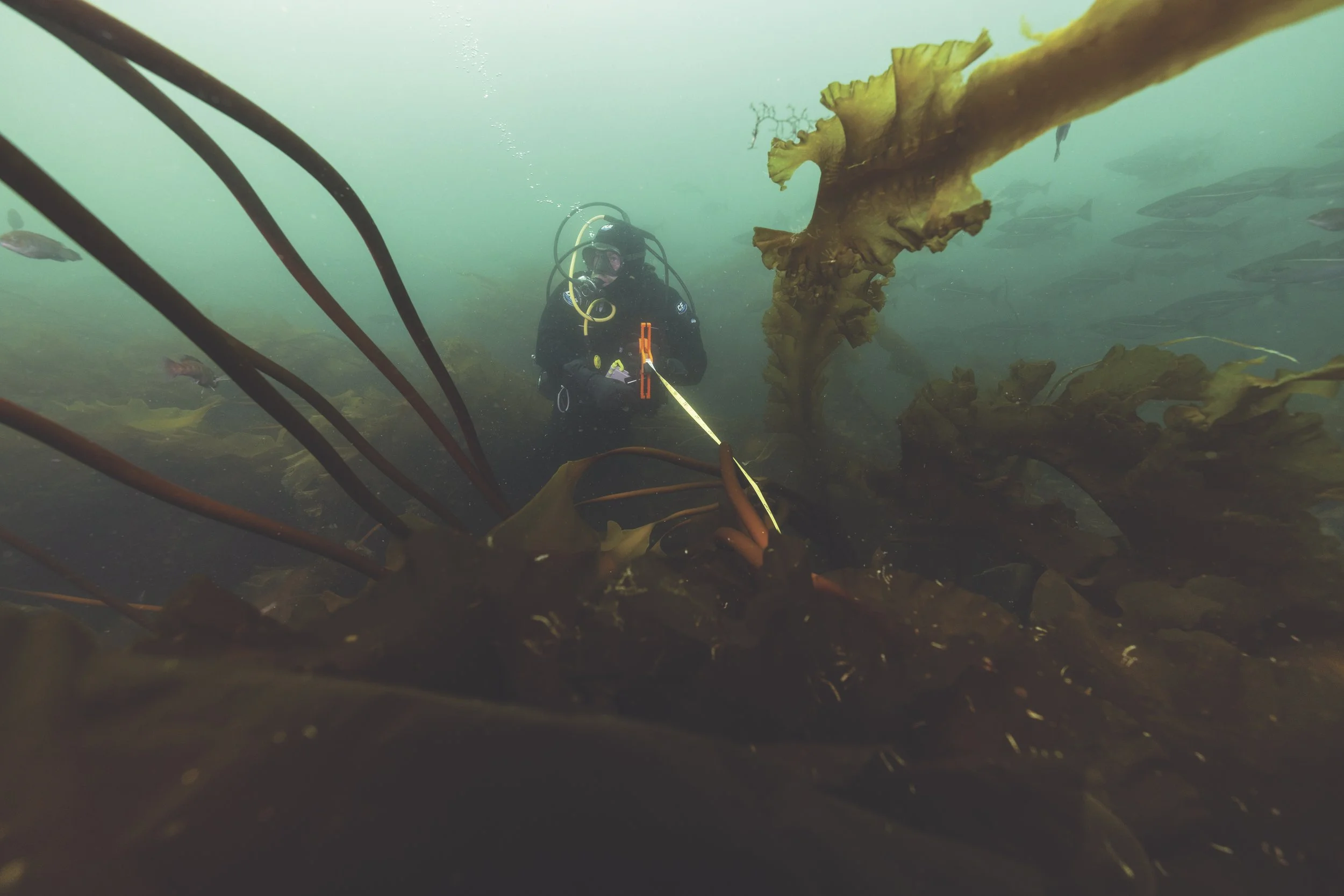
Dr. Robbie Lamb runs a transect to count fish at Cashes Ledge as part of a long-term study.
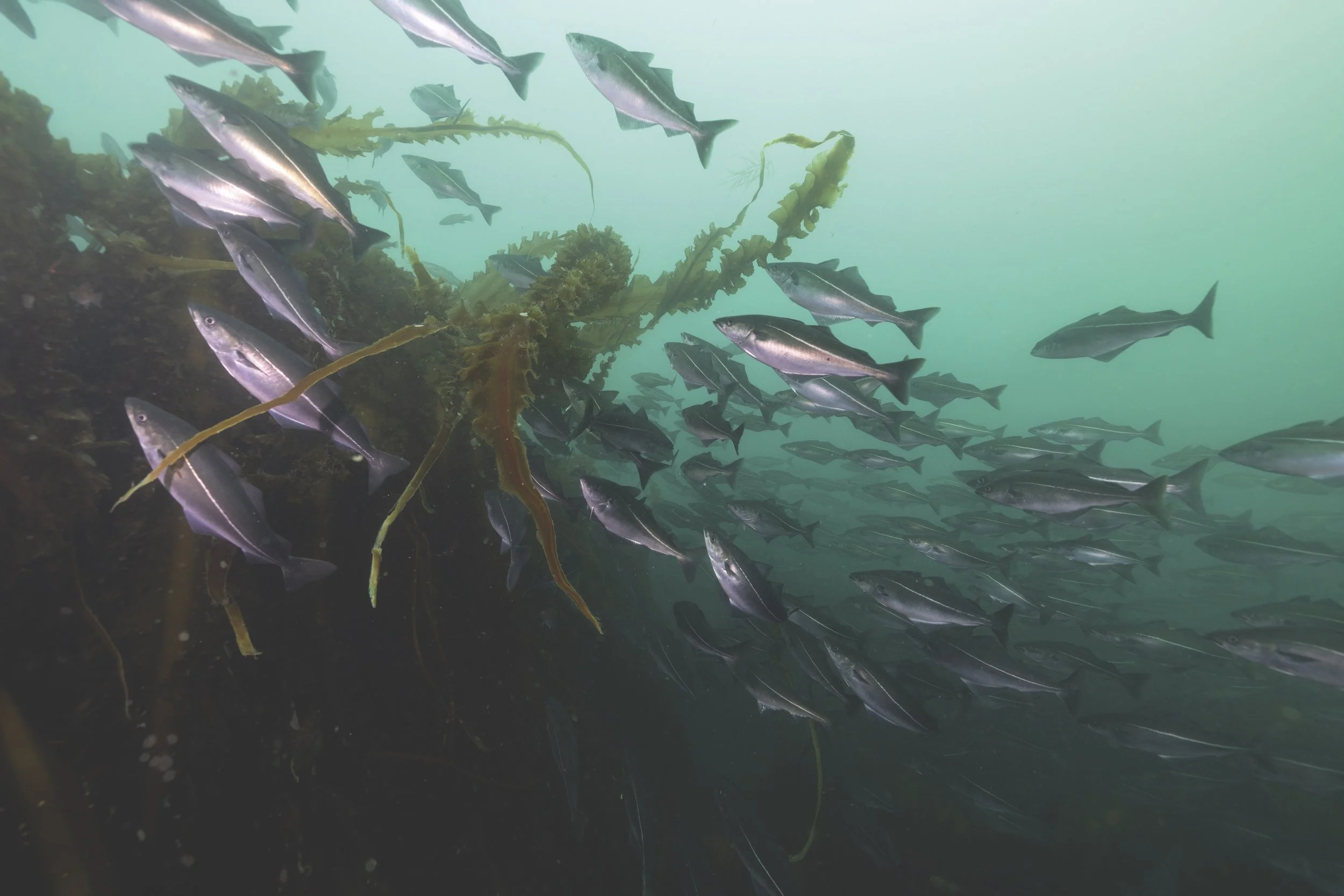
A school of Atlantic pollock (Pollachius sirens) swims above the sugar kelp (Saccharina latissima) on Cashes Ledge.
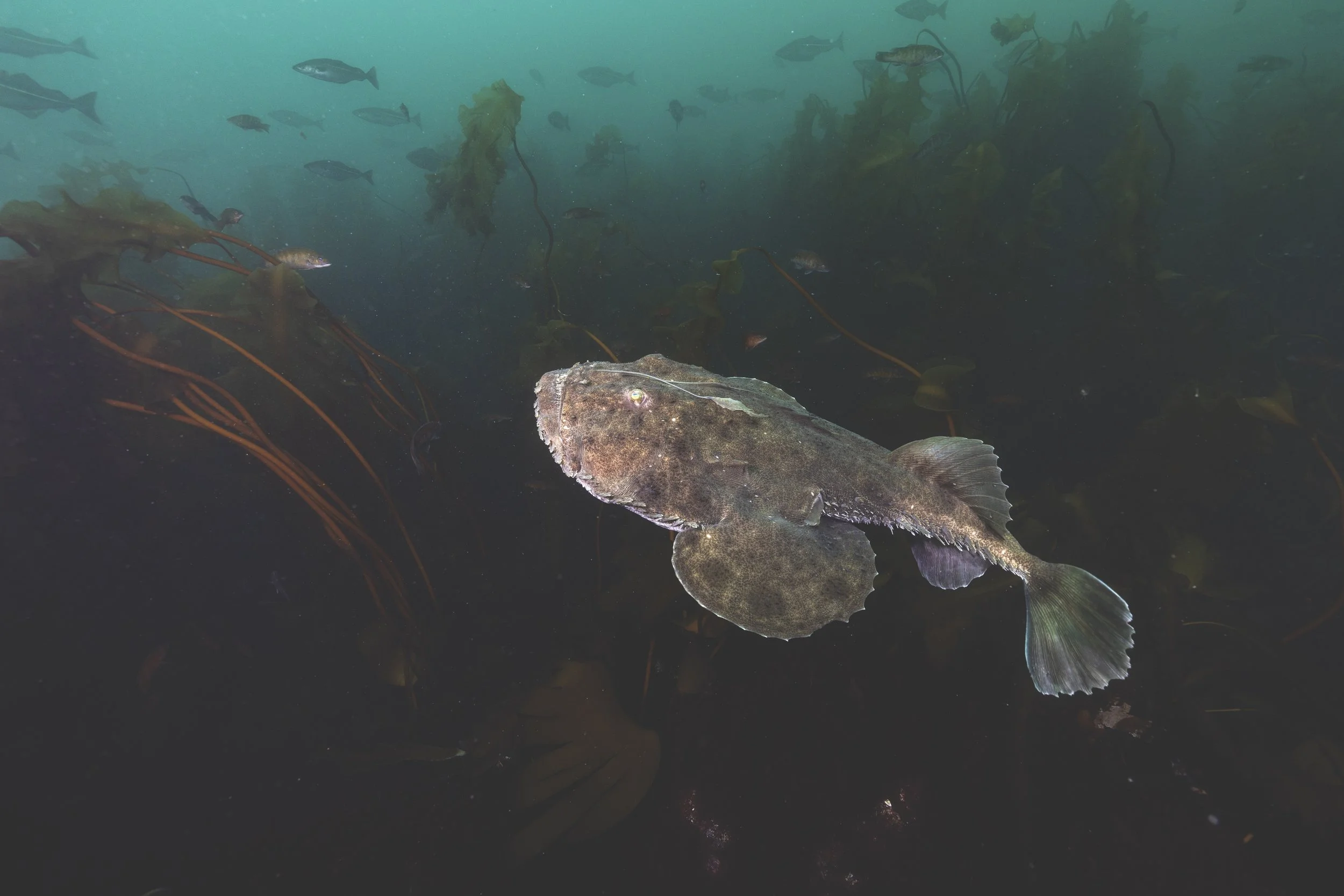
A monkfish (Lophius americanus) swims through the kelp forest.
Visit clf.org to learn more about how Cashes Ledge is being protected.