

Analog Dreams at Kinonik
Arts & Culture
The hidden haunt for film lovers
Words & Photo By Casey Oakes
Growing up in Cape Elizabeth in the ’90s, we collected Beanie Babies by the dozens and chose our own adventures in the yellowed pages of Goosebumps books. SpaghettiOs straight from the can counted as dinner, and everyone carried the same L.L.Bean backpack with their initials embroidered on it. We spent our Saturday mornings watching cartoons and eating strawberry Pop-Tarts.
This was before the internet consumed everything. DVDs didn’t exist, and streaming was a futuristic whisper. We traded secrets on floppy disks and had our friends’ phone numbers memorized by heart.
At the center of it all was the local video store. A day wasn’t complete without stopping at Video Jam, picking out something new to rent before rifling through the licorice sticks, gummy worms, and microwave popcorn that lined the counter. A tiny freezer at the checkout held ice cream by the scoop. And behind the register were the two guys every local knew by name. I read the covers of every VHS, choosing new worlds I was about to discover.
Back then, Bull Moose ruled the basement on Middle Street, tucked beside Anthony’s Pizza with its Sopranos memorabilia and perfect pepperoni slices. Across the hall sat Newbury Comics and Video Port—which would deliver movies right to your door.
In those days, I visited Nickelodeon Cinemas in Portland weekly, especially for dollar movie nights. Sometimes, I wandered down into the dark, beloved little room that was Movies on Exchange. That was where you found “the strange stuff.” I settled in with my popcorn, not knowing if what flickered through the projector would come and go quietly or stay with me forever. Films like Pulp Fiction (1994) and Moulin Rouge! (2001) and Halloween replays of Rocky Horror Picture Show (1975) didn’t simply pass through my life, they became a part of it.
There’s no place like the movies. Where else can first dates, fathers and sons, elderly couples, and teenagers sit together in the dark for a shared experience? Only theaters had that power.
The days of VHS tapes, dollar movie nights, and Movies on Exchange disappeared long ago. So, imagine my surprise when I discovered Kinonik on Cassidy Point, a nonprofit microcinema screening movies on 16mm and 35mm film.
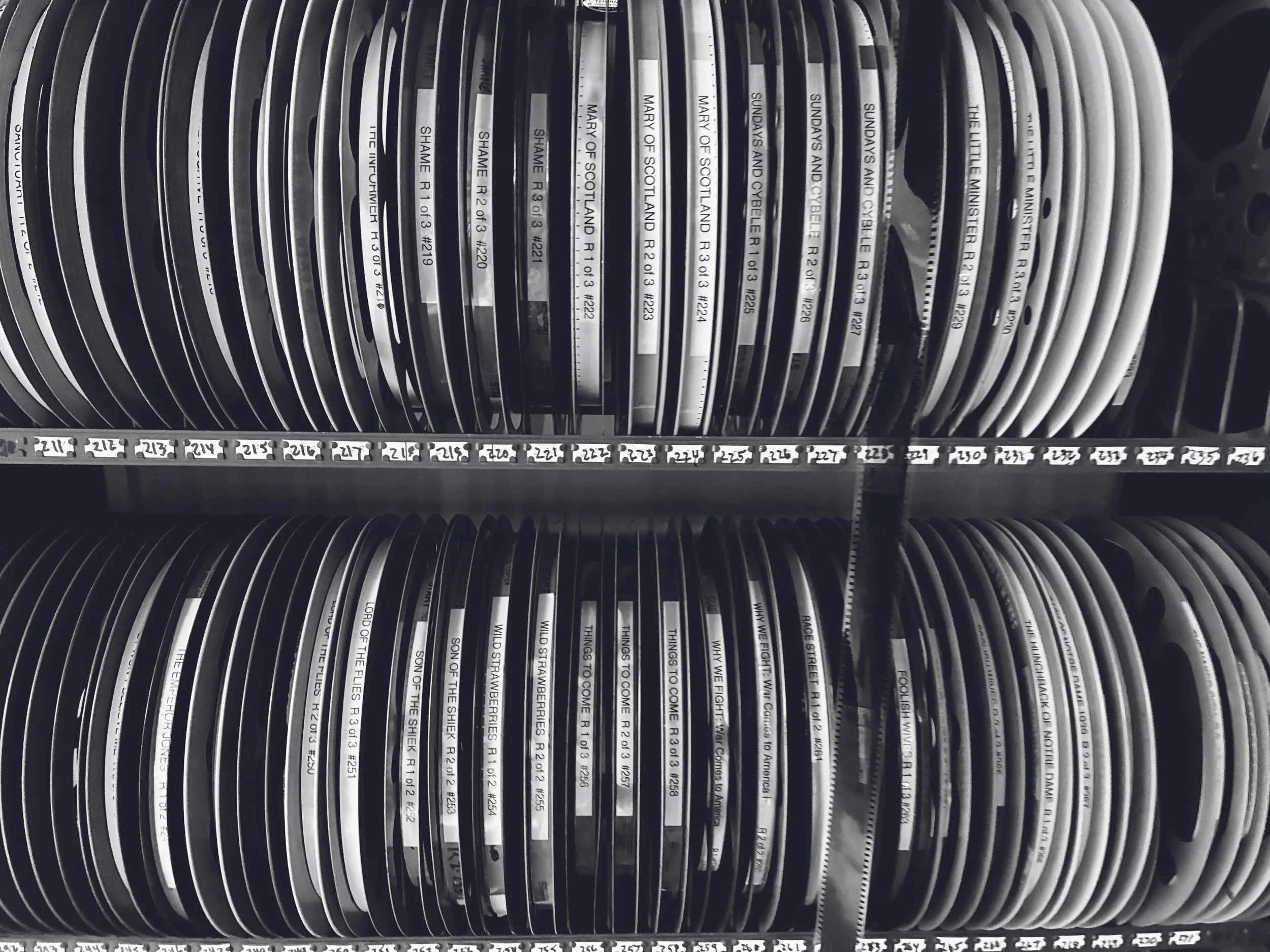
Founded by Skylar Kelly and Andy Graham, Kinonik grew out of the personal collection of Juris Ubans, a film enthusiast and former art professor at the University of Southern Maine. Today, the archive includes more than 2,000 films, including Jacques Tourneur’s Cat People (1942), Ingmar Bergman’s The Virgin Spring (1960), and Werner Herzog’s Aguirre, the Wrath of God (1972).
Kelly and Graham say their programming pairs beloved classics with overlooked titles, “works that had something to say, tried something different, captured the fears and hopes of their time, that marked a turning point in storytelling.”
When I visited Kinonik, I saw The Witch, not the 2015 Robert Eggers horror, but a dreamy 1966 Italian thriller by Damiano Damiani. It’s all there—seduction, cults, and paranoia. The theater’s name is a nod to Kinoton, a German maker of cinema equipment. That ambiguity suits it well. The name feels analog and slightly mysterious. It carries a sense of nostalgia without feeling trapped in the past.
With the last remaining film projector in Portland and the only venue north of Boston regularly showing films on celluloid, it’s easy to see why a devoted community has made it part of their weekly routine. At just 55 seats, Kinonik frequently sells out.
“Everything is too fast,” says Kelly. “People want to slow down.”
Calmed by the steady purr of the projector, I could see myself becoming a regular, too.
It’s a comfort to know places like Kinonik exist. Hidden gems holding space for the hush that falls over a room when strangers gather for a shared moment.
Then, the room fades to black.
To support Kinonik, become a member by scanning the QR code or visiting kinonik.org