

Winter is for the Birds
Root & Bloom
Not all fly south—meet the species that brighten Maine’s coldest days
words by melissa kim
photography courtesy maine audubon;
cedar waxwing photo by doug hitchcox
Winter is an exceptional time to get to know the birds that stay in Maine all year long. While many species migrate south, a remarkable number remain with us year-round, adapting with resilience and resourcefulness to the cold. We can assure you that winter birding offers some of the most rewarding encounters of the year. In this piece we’ll explore the species most commonly seen during Maine’s cold months and establish how to recognize them.
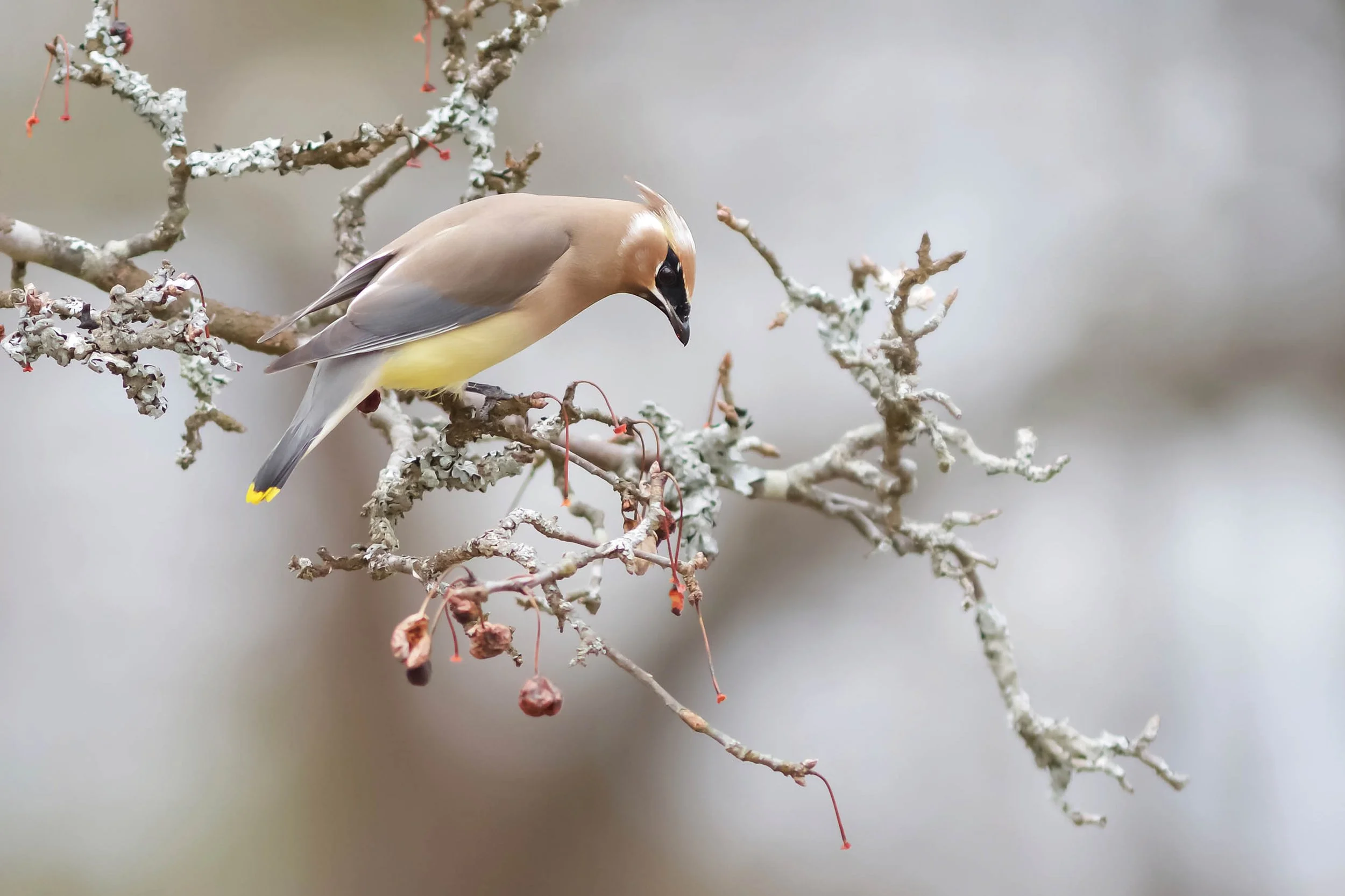
Cedar Waxwing
With their silky smooth plumage, Cedar Waxwings are a visual treat to witness through a pair of binoculars or outside your window. These striking birds get their name from (historically) feeding on cedar berries, but are now more likely to be encountered on ornamental plantings, often even in urban settings. The “waxwing” part of their name comes from the scarlet-red droplets on the tips of their secondaries—the inner half of the wing. And if you have any non-native honeysuckle growing in your yard, be sure to remove the plants because waxwings are known to eat the fruit, which unfortunately spreads the seeds.
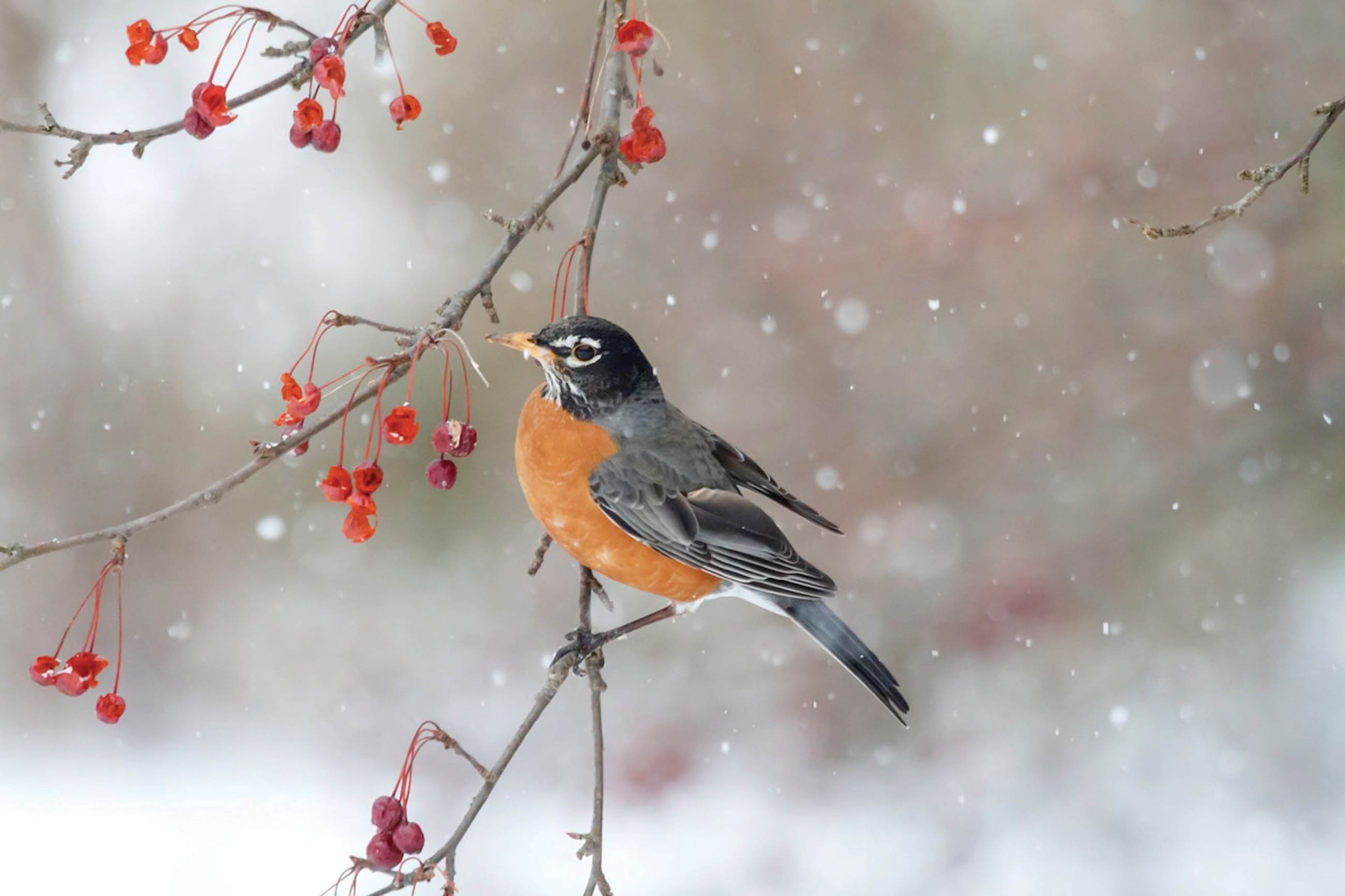
American Robin
The American Robin, or kwikweskas in Abenaki, is one of the most widespread and beloved backyard birds in North America. They are often easiest to locate by their sputtering calls, from which their onomatopoeic Abenaki name is derived. While these large, charismatic songbirds are heralded as a sign of spring when they flock to lawns in search of worms in the freshly-thawed soil, they do actually spend the winter in Maine. Their latin name is Turdus migratorius, and while migratorius makes you think of migratory, it also means wandering, which is basically what robins do throughout Maine winters. They wander around, usually in large flocks, looking for food sources. Any hardy, fruit-bearing trees and shrubs, like winterberry and crabapples, and especially staghorn sumac (Rhus typhina), are good places to find them.
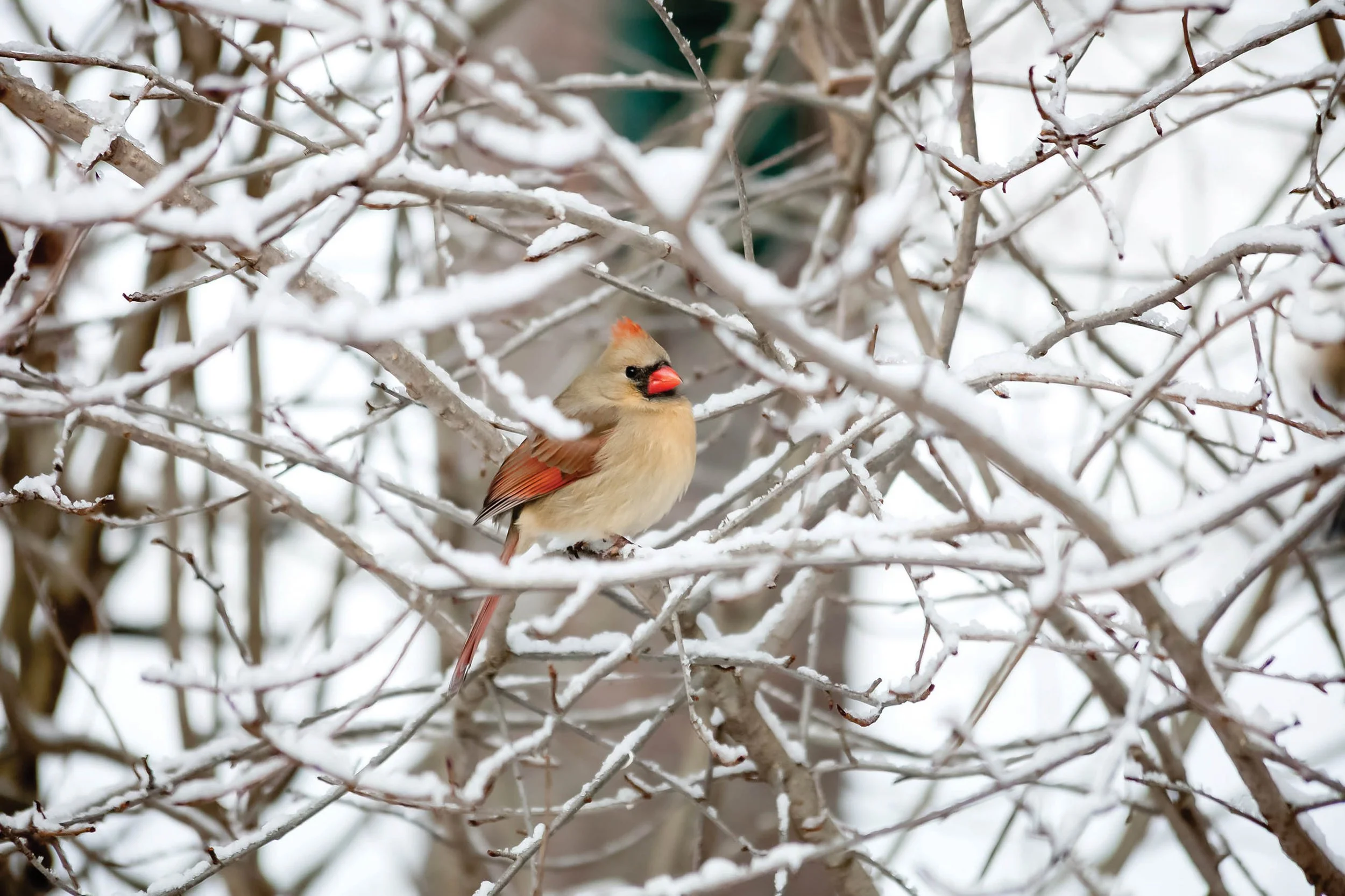
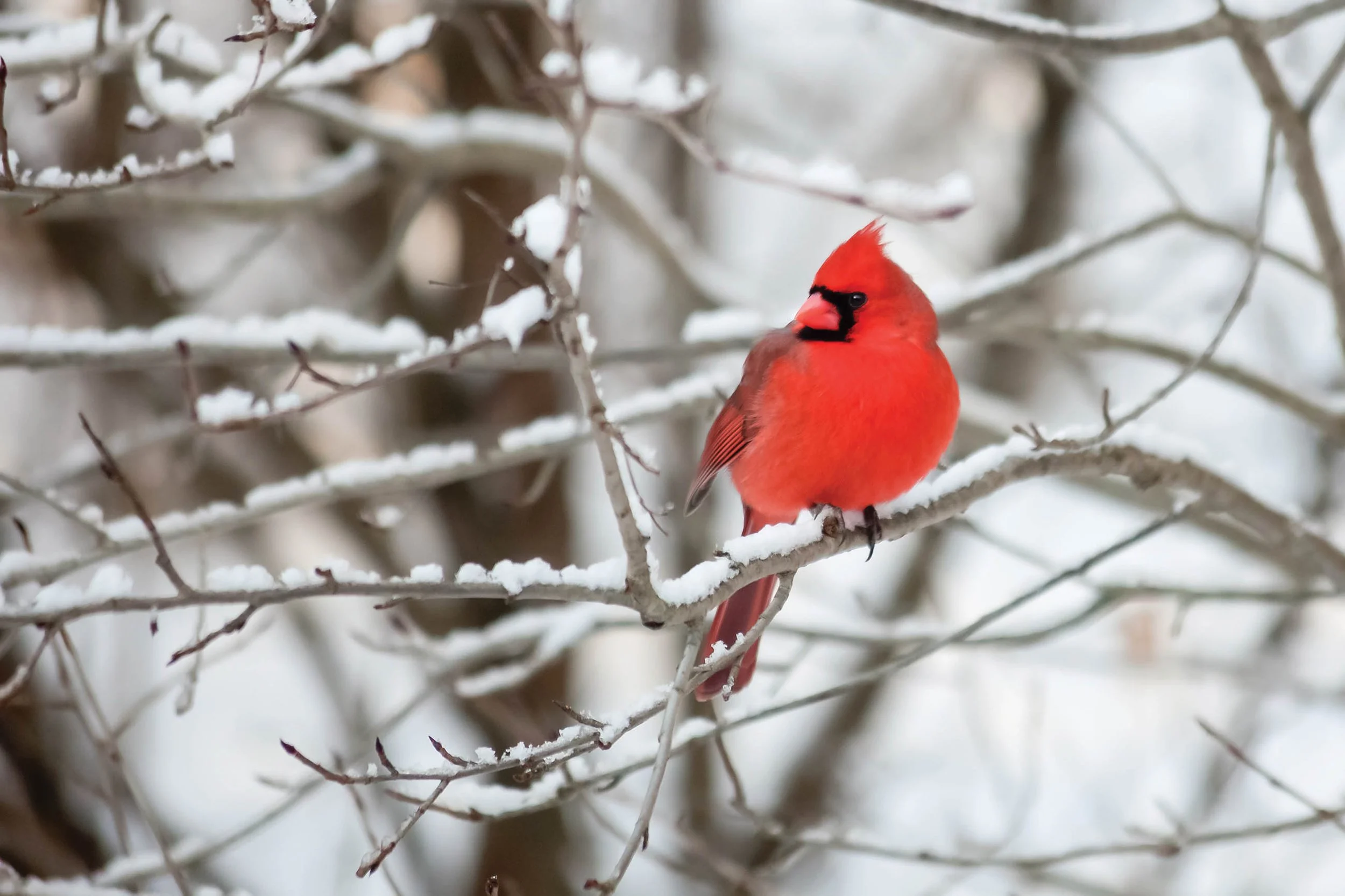
Northern Cardinal
The vibrant red plumage of Northern Cardinals is always a welcome sight on a cold day. Northern Cardinals molt their feathers once per year, usually in August or September, after nesting and before winter. To regrow their bright red feathers, they must eat fruits (and insects) high in carotenoids, pigments that give many plants and animals their red, orange, and yellow colors. Cardinals get these pigments from the fruits of plants like honeysuckles, sumacs, and their favorite, wild grapes. They are even capable of peeling grapes with their beak before eating the pulp and seeds.
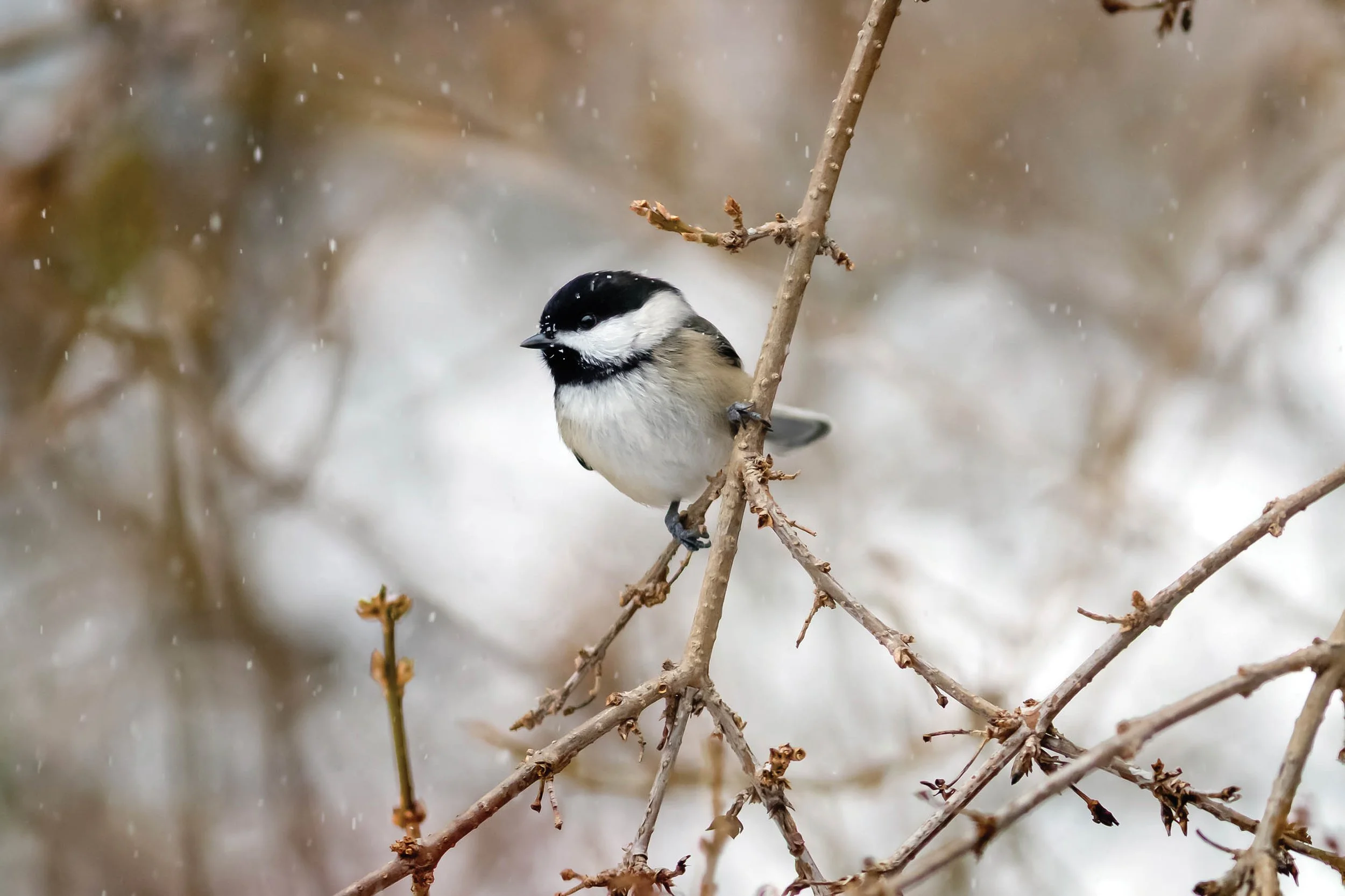
Black-capped Chickadee
Perhaps the best-known bird in the state, holding the title of “Maine’s State Bird,” is the Black-capped Chickadee, an amazing survivor thanks to its wits. For a bird that is just over five inches long and that weighs less than the equivalent weight of five pennies, it is remarkable that it can survive Maine’s harsh winter, while most other birds its size migrate to warmer climates. One adaptation chickadees have is a proportionately large hippocampus (the memory center of the brain) which grows even in the fall. They fill their expanding brains with information about where they have cached food and can accurately remember where they stored it, and the quality of it, for up to 28 days! Chickadees eat a surprising number of insects and spiders throughout the winter—up to 50% of their diet—but having an abundance of seeds that they’ve stored is apparently an important part of their survival when food is scarce.
To learn more about Maine Audubon, head to maineaudobon.org.
