
Out & About
Feast & Toast
Artisan cheesemaker Sarah Parsons Spring created a post-pandemic champion
words by christine burns rudalevige
photography by stephen davis philllips
While Shakespeare’s Juliet refers to sweet roses, her question about what’s in a name can also be asked about stinky cheeses. The name of a cheese encompasses many things: time and place, intrinsic ingredients and those pulled from thin air, longstanding technical tradition, and turns taken by today’s artisans.
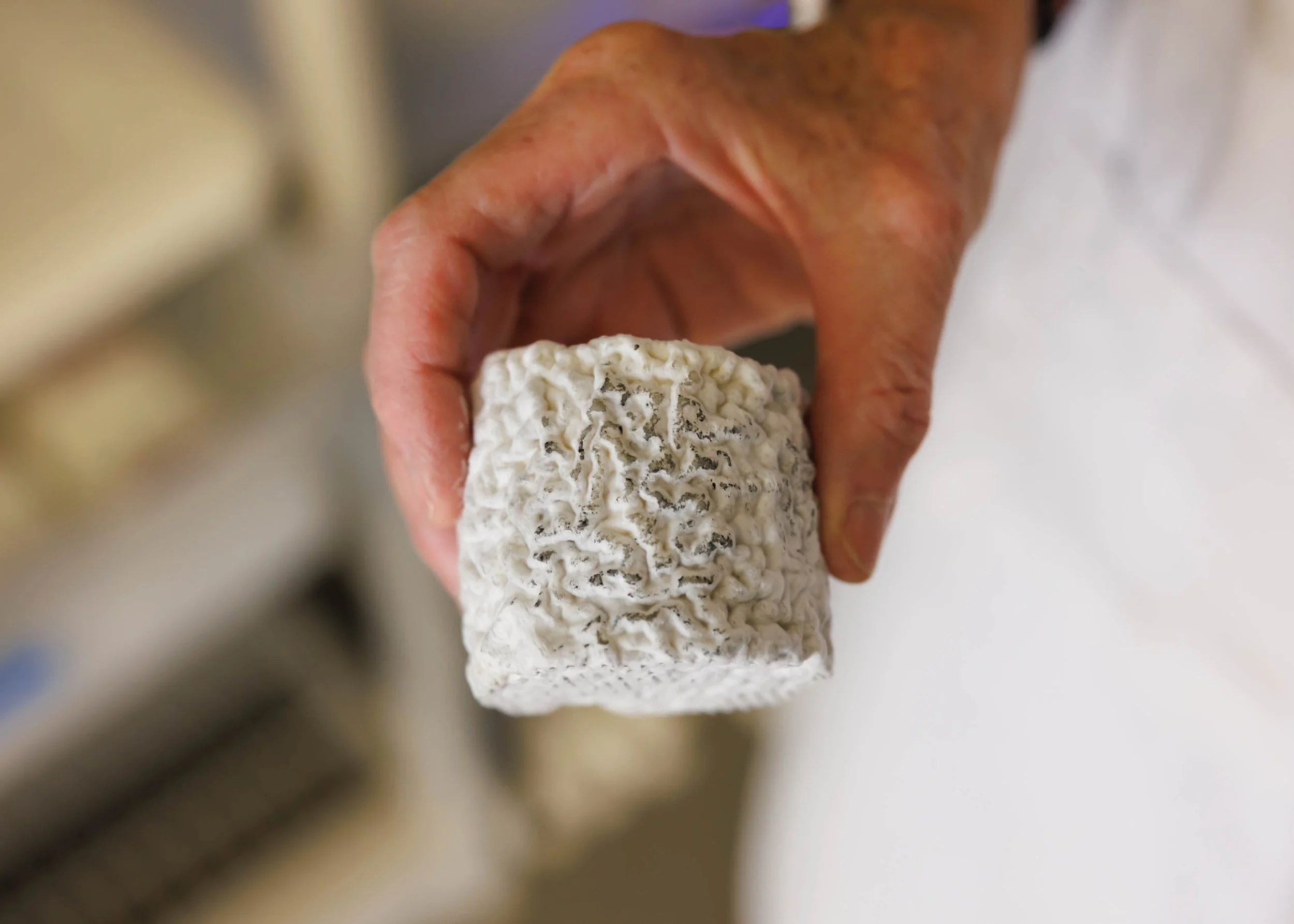
Experienced cheesemaker Sarah Parsons Spring named her latest creation Out & About because she perfected its recipe in the middle of 2021, just as folks started moving out and about more freely after the long period of pandemic social distancing. Like her blue cheeses that carry names such as Spring Day Blue, Fraffie, Deja Blue, and a pyramid-shaped beauty named Evangeline, which won Best in Show at the 2025 Maine Cheese Festival, Out & About—a small, ash-covered, cylindrical cheese—has won Maine Cheese Awards competitions. Regionally, it captured a gold at The Big E cheese competition in western Massachusetts, and nationally, it brought home the bronze in the 2025 American Cheese Society’s softripened, cow’s-milk cheese category.
Out & About is a geo-cheese, Spring explains, using cheesewright vernacular to describe soft-ripened dairy products that have Geotrichum candidum in the mix. Geotrichum candidum is a yeast she adds to warm milk.
It acts on the eventual rind to create soft, wavy troughs and peaks that resemble the surface of the brain. Yes, Out & About is a brainy cheese. And if you’re smart, says Will Sissle, owner of Sissle & Daughters Cheesemongers & Grocers in Portland, you’ll get your hands on one ASAP because they fly out of his Washington Street shop as fast as Spring can make them.
But how does she make them?
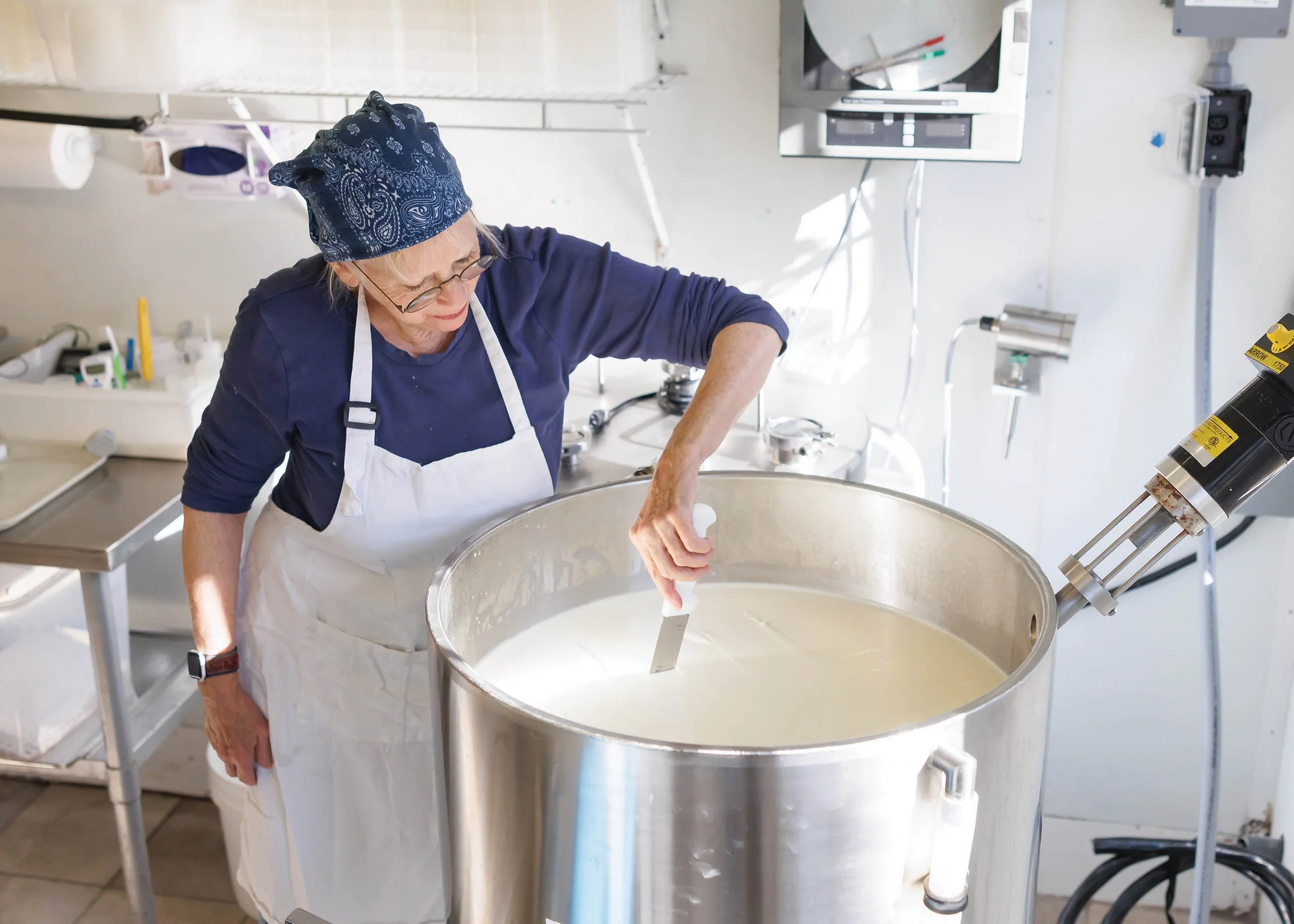
From start to finish the process takes about a month, says Spring, give or take a few days depending on how the Geotrichum candidum decides to behave in a particular batch. In her impeccably clean micro-dairy housed in the repurposed garage of her historic farmhouse on Day Road, she can make 110, four-ounce Out & About cheeses in a single batch.
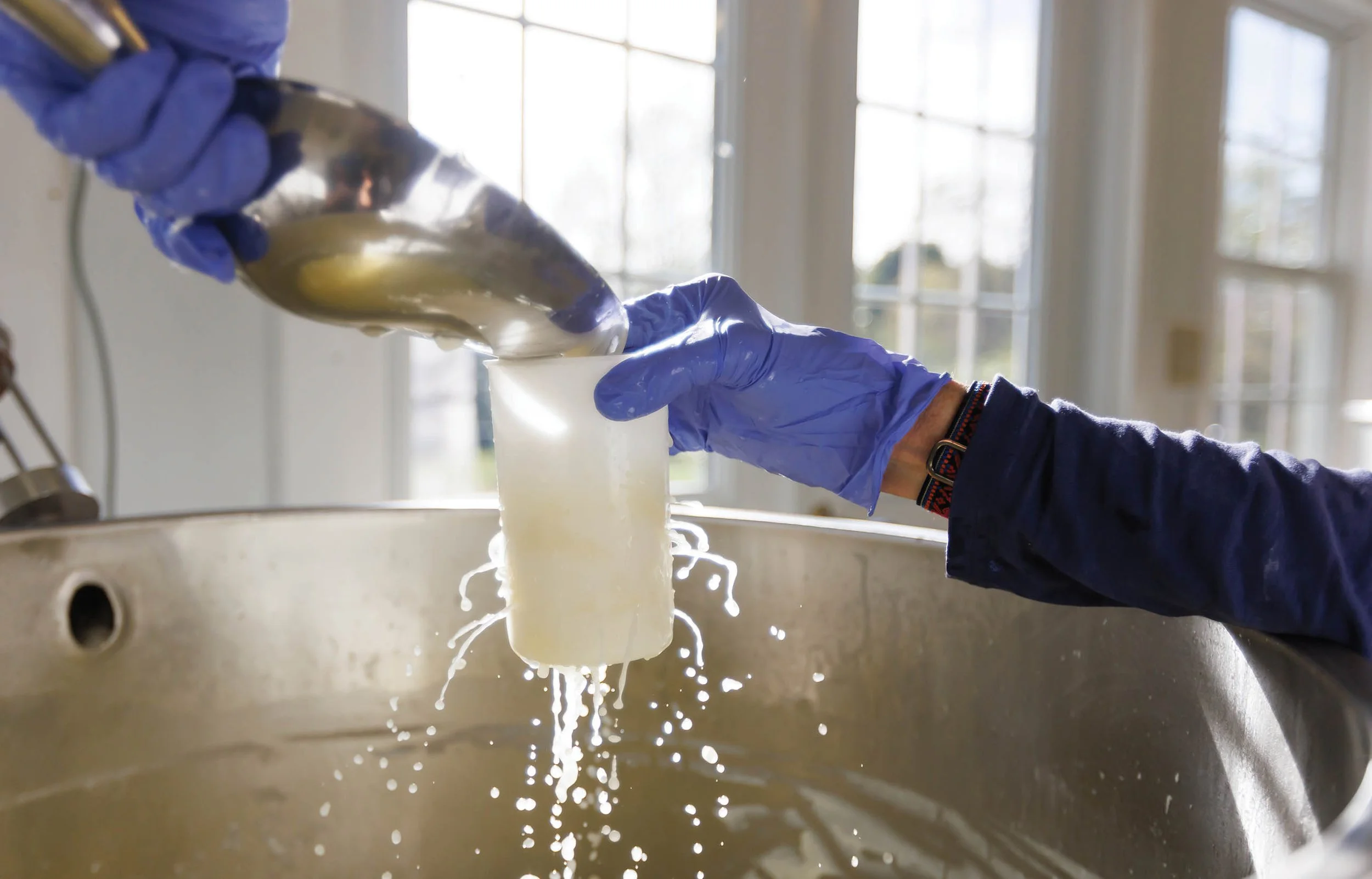
One gallon of milk makes roughly one gallon of cheese in most of Spring's recipes.
Like all Spring Day Creamery products, the raw material for Out & About is milk from Jersey cows residing at the Milkhouse Dairy Farm & Creamery in Monmouth. Every other Monday, the raw milk arrives in shapely, shiny, eight-gallon cans that simultaneously evoke dairy tradition and modern food handling protocols. One gallon of milk makes roughly one pound of cheese in most of Spring’s recipes.
While some of Spring’s cheeses are made with raw milk, a batch of Out & About entails pasteurizing the milk in a digitally monitored tank at 145 degrees Fahrenheit for 30 minutes. She lowers the temperature of the milk by running cold water through the outer jacket of the tank until the milk is between 80- and 90-degrees. She then stirs in a cocktail of cultures, rennet, and Geotrichum candidum in amounts that she uses a jewelry scale to weigh accurately into it.
Then Spring waits.
Overnight, the curds coagulate into a pillowy white mass floating in slightly cloudy liquid whey. Spring arranges purpose-built, eight-inch high, cylindrical, food-grade plastic molds from France on top of a makeshift draining system comprising completely sanitized plastic crossstitch mats, metal baking racks, a sloping stainless steel table with a drain that opens to a restaurant bus tub kitted out with a sump pump that moves the drained-off whey out of the cheesemaking rooms to water the various fruit trees in her backyard orchard on a rotational basis so no soil is overacidified in the process.
And she waits again.
Spring uses a commercial ice scoop to gently lift the curds from the three-foot-wide mouth of the pasteurization tank and expertly deposits them into the three-inch-wide mouths of the molds. She fills the molds to within an inch of the top, just above the last row of holes punched into the molds, to allow whey to seep from the curds. This process takes over an hour because the curds are so fragile at this stage.
And then she waits again.
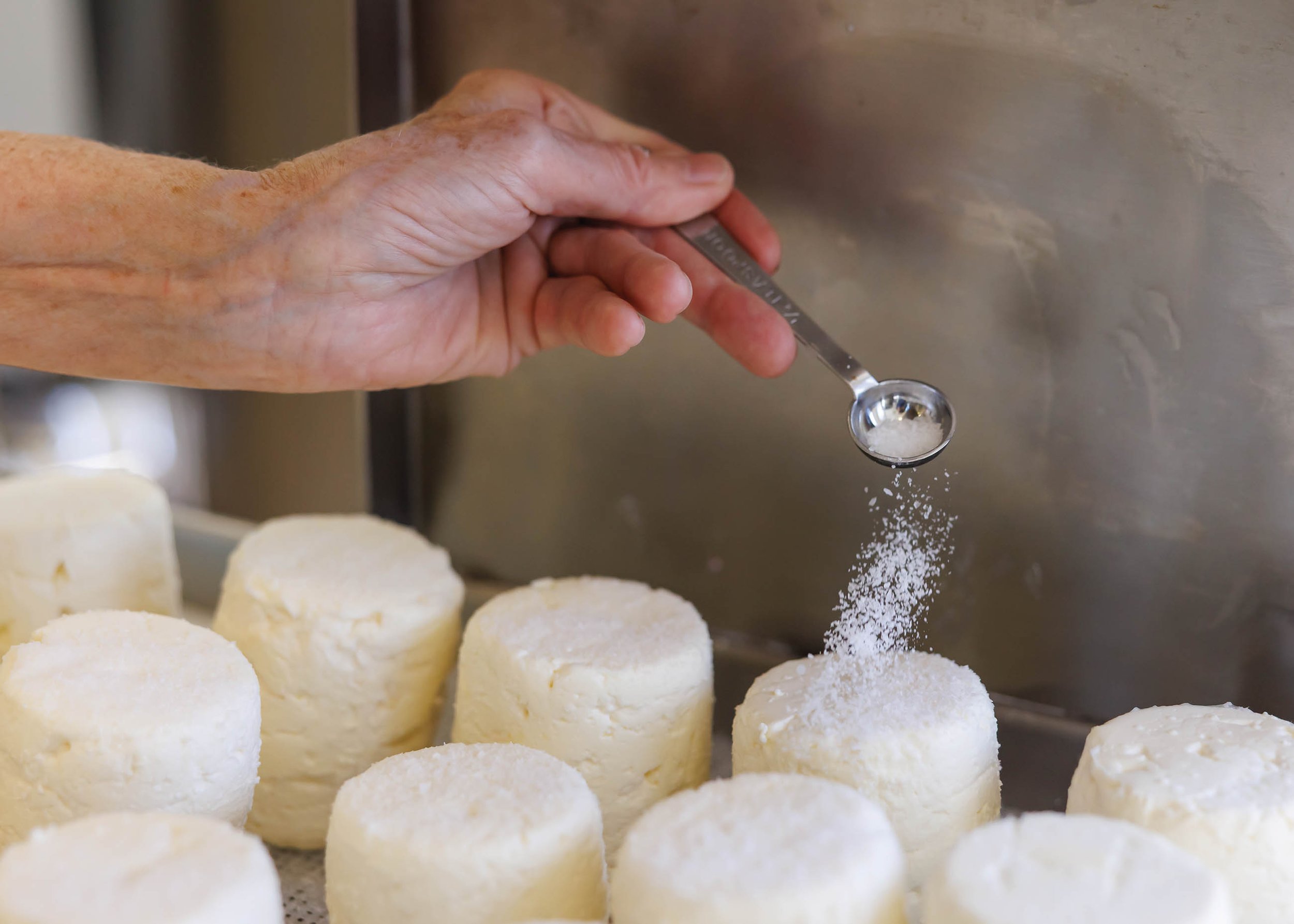
By the morning of the third day, the curds have drained enough so that Spring can gingerly turn them over in the molds. With sterile gloves and a meditative rhythm, she lifts the mold with her left hand and turns the young cheese out into her right palm. She slides it back into the mold upside down, places the mold back in its place on the draining board, and moves on to the next. When she has turned them all, she sprinkles each with a bit of kosher salt. The next day, she turns them out of the molds onto the cross-stitch mats and salts each on the second side.
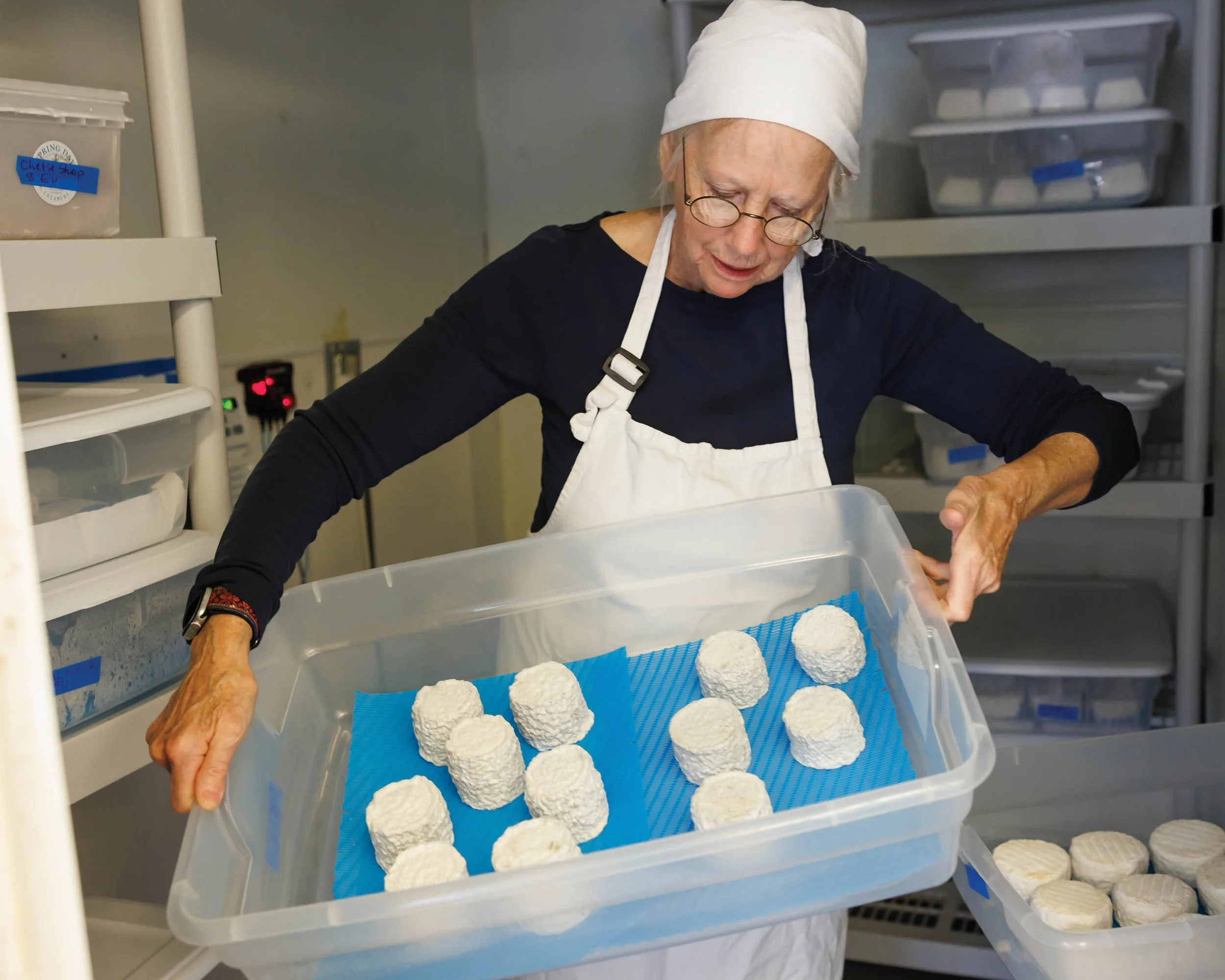
From start to finish, the process of making Out & About takes approximately a month.
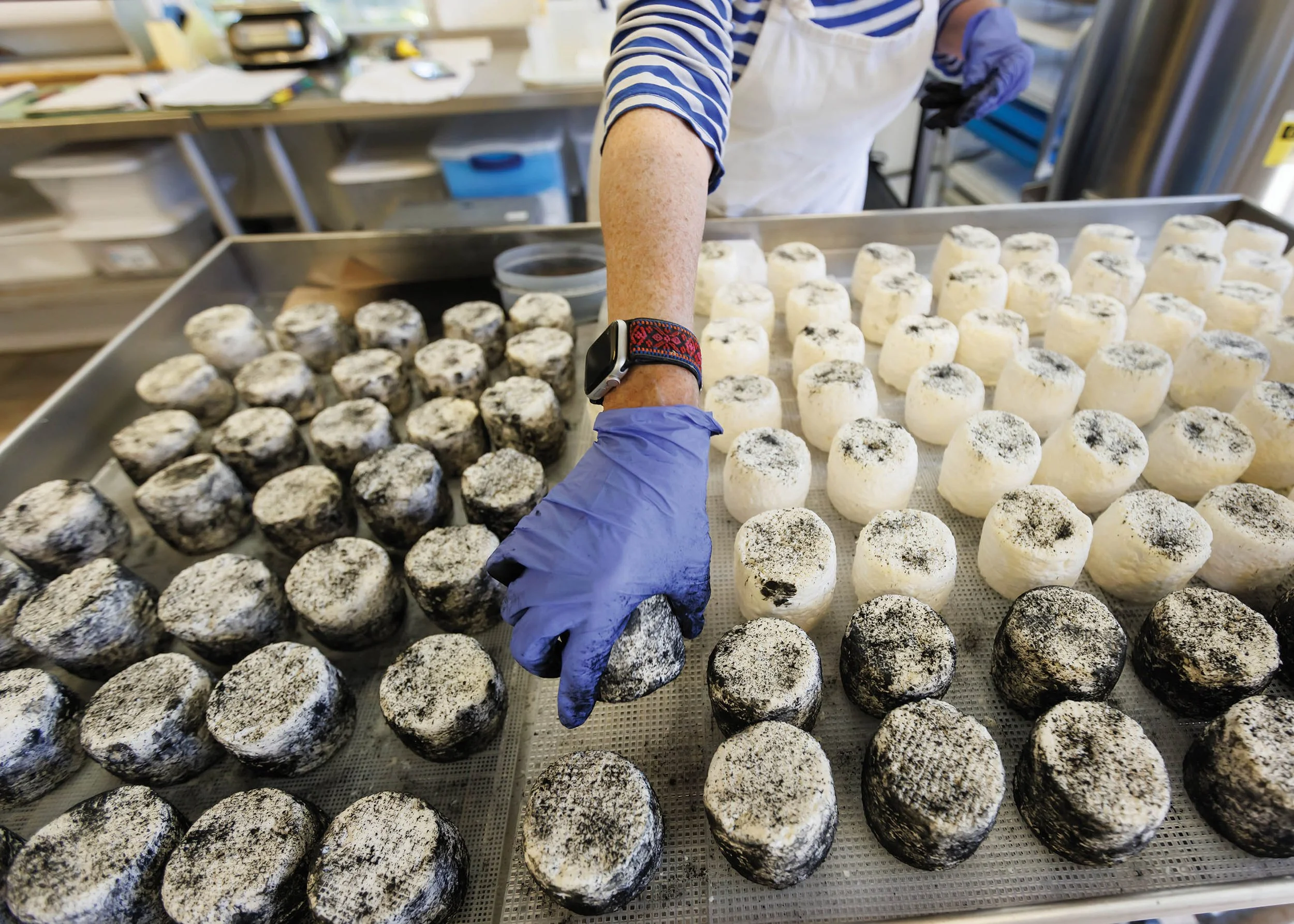
And more waiting.
The cheeses sit in the cheesemaking room for about a week while they dry, and the Geotrichum candidum begins to develop just a blush on the rind at this point. Then Spring adds the vegetable ash, ground so finely she wears a surgical mask so it doesn’t get into her lungs. The motion is a pat, pat, pat, more than a rub, as she doesn’t want to tear the rind she’s waited so long for.
Then they go into her cheese cave—a temperature controlled corner of the creamery lined with floor to ceiling racks for the yeast to work its wrinkly magic. There they sit on ribbed plastic mats so the marks left on the bottom of the cheese will resemble the bamboo mats used in traditional French-made cheeses. They are ready to be called Out & About when Spring feels a little give as she gently squeezes the sides, and they look quite fetching because the rinds have fully developed.
Sissle likens it to one of his all-time favorites called Inverness, formerly made by Cowgirl Creamery in California. The paste inside the dark and wrinkly Out & About rind is soft, light, and fresh like coastal fog when the three-inch cylinders are young. He credits that feature to Spring’s gentle handling of the curds. As the cheese ages, it gets runnier and more earthy tasting. As it ages even more, the paste just inside the rind also starts to get runny.
Sissle advises serving Out & About cut in half horizontally with apricot jam on a cheeseboard or with pieces of dark chocolate for dessert. In addition to Sissle & Daughters, Spring sells Out & About year-round at the Saturday farmers market in Brunswick for $9.
“It’s a beautiful, little gem of a cheese,” says Sissle. “One of the prettiest we sell.”
For more information on Spring Day Creamery cheeses, visit springdaycreamery.com.